



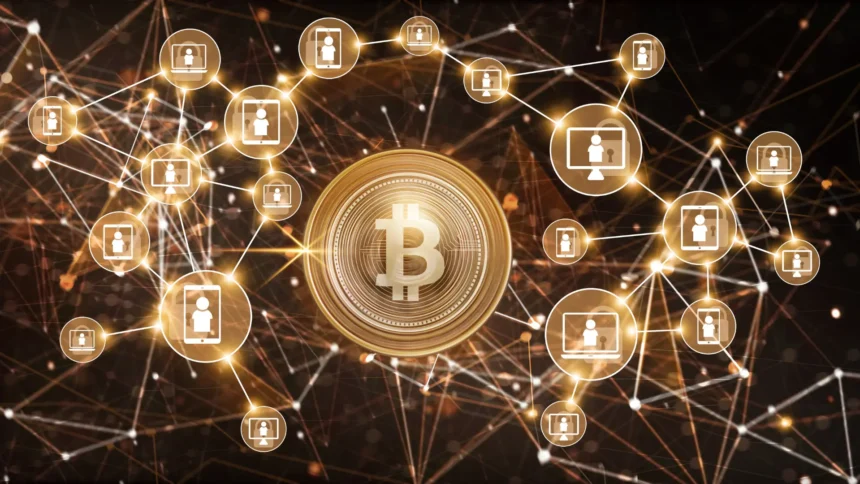
Blockchain technology is no longer defined solely by cryptocurrency. While digital assets introduced blockchain to the world, the technology has evolved into a powerful infrastructure tool transforming industries far beyond finance. In 2026, blockchain is being adopted across supply chains, healthcare, real estate, government systems, and enterprise operations.
- Understanding Blockchain Beyond Digital Currency
- Supply Chain Transparency and Traceability
- Healthcare Data Management
- Digital Identity and Verification
- Real Estate and Property Transactions
- Government and Public Sector Applications
- Cross-Border Payments and Trade Finance
- Energy and Sustainability Applications
- Enterprise Blockchain Integration
- Challenges Limiting Wider Adoption
- Emerging Trends in 2026
- Economic and Strategic Impact
- Conclusion
Organizations now view blockchain as a secure, transparent, and decentralized system capable of improving trust, efficiency, and accountability in complex networks.
Understanding Blockchain Beyond Digital Currency
At its core, blockchain is a distributed ledger technology that records transactions across multiple computers in a secure and immutable way. Once data is added to the chain, it cannot be altered without network consensus.
This makes blockchain valuable for:
- Secure record keeping
- Transparent transaction tracking
- Fraud prevention
- Process automation
- Cross-border data verification
In 2026, industries are leveraging these features to solve real-world operational challenges.
Supply Chain Transparency and Traceability
One of the most significant non-cryptocurrency uses of blockchain is in supply chain management.
Companies use blockchain to:
- Track goods from origin to delivery
- Verify product authenticity
- Prevent counterfeiting
- Improve logistics efficiency
- Enhance compliance reporting
By recording every step of a product’s journey, blockchain creates a transparent audit trail. This is particularly valuable in industries such as pharmaceuticals, agriculture, and luxury goods, where authenticity and safety are critical.
Consumers increasingly demand transparency, and blockchain helps companies build trust by providing verifiable supply chain data.
Healthcare Data Management
Healthcare systems are adopting blockchain to secure patient records and streamline medical data sharing.
Applications include:
- Secure electronic health records
- Cross-hospital data access
- Pharmaceutical tracking
- Clinical trial transparency
- Insurance claims processing
Blockchain reduces the risk of data breaches and ensures that patient information remains tamper-proof. It also enables patients to maintain greater control over their medical records.
In regions with fragmented healthcare systems, blockchain can unify data without centralizing it, preserving both accessibility and security.
Digital Identity and Verification
Digital identity solutions are becoming a major blockchain application in 2026. Governments and enterprises are exploring decentralized identity systems that allow individuals to control their personal data.
Benefits include:
- Reduced identity fraud
- Faster onboarding for financial services
- Secure online verification
- Simplified cross-border travel authentication
Blockchain-based identity platforms allow users to verify credentials without exposing sensitive data unnecessarily.
This approach enhances privacy while maintaining regulatory compliance.
Real Estate and Property Transactions
Blockchain is modernizing real estate transactions by digitizing property records and automating agreements.
Key benefits include:
- Faster property transfers
- Reduced paperwork
- Transparent ownership records
- Automated escrow through smart contracts
Smart contracts automatically execute transactions once conditions are met, reducing reliance on intermediaries and lowering costs.
In some markets, tokenization of real estate assets allows fractional ownership, opening investment opportunities to a broader audience.
Government and Public Sector Applications
Governments worldwide are experimenting with blockchain for greater transparency and efficiency.
Applications include:
- Land registry digitization
- Secure voting systems
- Tax compliance tracking
- Public procurement transparency
- Welfare distribution management
Blockchain reduces corruption risks by creating permanent, verifiable records of transactions and decisions.
Public sector adoption strengthens citizen trust and improves administrative efficiency.
Cross-Border Payments and Trade Finance
While cryptocurrency is not the focus, blockchain remains highly relevant in financial services.
Banks and fintech companies are using blockchain to:
- Speed up cross-border payments
- Reduce transaction costs
- Improve trade finance documentation
- Enhance compliance monitoring
Traditional cross-border payments can take days to settle. Blockchain networks enable near-instant settlement with lower fees and improved transparency.
Energy and Sustainability Applications
Blockchain is also entering the renewable energy sector. Peer-to-peer energy trading platforms allow consumers to buy and sell excess renewable energy using blockchain systems.
Applications include:
- Smart grid management
- Carbon credit tracking
- Renewable energy certification
- Energy consumption monitoring
Blockchain enhances transparency in sustainability reporting and helps organizations verify carbon reduction efforts.
Enterprise Blockchain Integration
Large corporations are implementing private or consortium blockchain networks to improve internal operations.
Enterprise use cases include:
- Secure document sharing
- Contract automation
- Inventory tracking
- Intellectual property protection
- Compliance auditing
These permissioned blockchain systems prioritize scalability, security, and efficiency for business environments.
Challenges Limiting Wider Adoption
Despite strong growth, blockchain adoption faces challenges:
- Scalability limitations
- Energy consumption concerns
- Regulatory uncertainty
- Integration complexity
- Interoperability between networks
Organizations must carefully evaluate cost, performance, and compliance requirements before implementation.
Emerging Trends in 2026
Blockchain innovation continues to evolve. Key trends shaping the future include:
- Integration with artificial intelligence
- Expansion of decentralized applications
- Interoperable blockchain networks
- Enhanced security protocols
- Green blockchain solutions focused on energy efficiency
As technology matures, blockchain platforms are becoming faster, more scalable, and more environmentally sustainable.
Economic and Strategic Impact
Blockchain beyond cryptocurrency is contributing to:
- Reduced operational costs
- Improved transparency
- Enhanced data security
- Greater process automation
- Increased global trade efficiency
By eliminating intermediaries and automating trust mechanisms, blockchain is reshaping how industries collaborate and exchange value.
Conclusion
In 2026, blockchain is no longer confined to cryptocurrency markets. Its real-world applications span supply chains, healthcare, finance, real estate, energy, and government systems.
As enterprises and public institutions continue integrating blockchain into core operations, the technology is proving its value as a secure, transparent, and efficient infrastructure layer for the digital economy.
The next phase of blockchain growth will be defined not by speculative assets, but by practical solutions that solve real-world challenges across industries worldwide.