



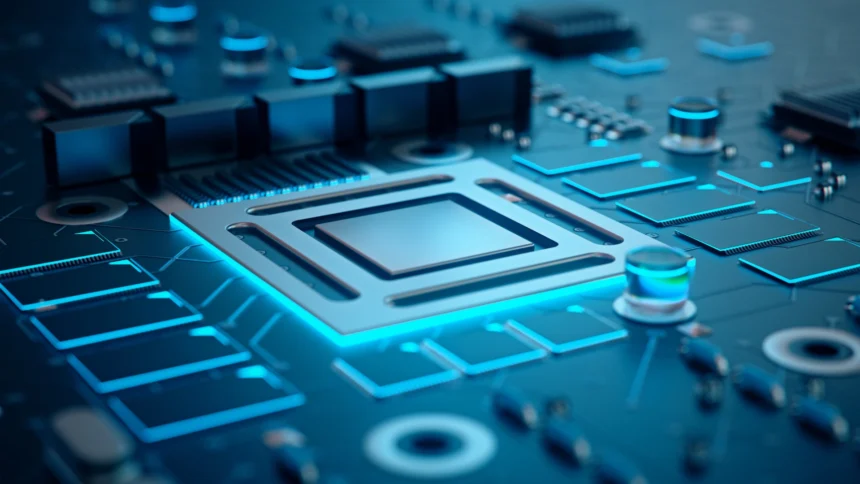
The world of consumer electronics is on the brink of a revolutionary shift, driven largely by advancements in semiconductor technologies. Semiconductors are the backbone of modern electronics, powering everything from smartphones and laptops to wearables and smart home devices. As these technologies evolve, they are poised to deliver unprecedented performance, efficiency, and functionality, transforming how we interact with technology in our daily lives.
The Evolution of Semiconductor Technology
Semiconductors have come a long way since the invention of the silicon transistor in the mid-20th century. Early chips were large, power-hungry, and limited in function, but modern semiconductors have become exponentially more powerful and compact. This evolution has been guided by Moore’s Law, which predicts that the number of transistors on a chip doubles approximately every two years. While traditional silicon-based technologies are approaching their physical limits, next-generation materials and architectures are enabling continued innovation.
Emerging semiconductor materials such as gallium nitride (GaN), silicon carbide (SiC), and indium gallium arsenide (InGaAs) are offering new possibilities. These materials provide higher electron mobility, greater thermal stability, and better power efficiency compared to traditional silicon, making them ideal for next-generation consumer electronics.
Impact on Consumer Electronics
- Smartphones and Mobile Devices
Modern smartphones are compact marvels, integrating processors, memory, graphics units, sensors, and connectivity modules. Next-gen semiconductor technologies will significantly enhance mobile devices by delivering faster processing speeds, lower power consumption, and improved thermal management. This will enable more sophisticated applications such as augmented reality (AR), virtual reality (VR), and advanced AI-driven features directly on mobile devices without relying on cloud computing. - Wearable Technology
Wearables like smartwatches, fitness trackers, and health monitoring devices benefit greatly from smaller, energy-efficient semiconductors. Advanced chips allow these devices to run longer on a single charge, collect more detailed health metrics, and even integrate new sensors for measuring blood oxygen levels, glucose, and other vital signs. As semiconductor technologies improve, wearable devices will become more autonomous and capable of handling complex computations locally. - Laptops and Personal Computers
Next-gen semiconductors are poised to reshape laptops and personal computers by combining high performance with energy efficiency. With innovations in 3D chip stacking and heterogeneous computing architectures, processors can handle intensive tasks such as gaming, video rendering, and AI computations without generating excessive heat. This not only improves user experience but also extends device longevity by reducing thermal stress. - Smart Home Devices
From smart speakers to connected appliances, next-generation semiconductors are making smart homes smarter. Chips that are optimized for AI and edge computing allow devices to process data locally, reducing latency and enhancing privacy. For example, smart cameras can analyze video in real-time for security purposes without sending sensitive data to the cloud. Energy-efficient semiconductors also help reduce the power consumption of always-on smart devices, making them more sustainable. - Gaming and Entertainment
Gaming consoles, VR headsets, and high-end graphics systems are heavily reliant on semiconductor performance. The latest GPU architectures leverage next-gen semiconductors to deliver higher frame rates, more realistic graphics, and AI-driven gaming experiences. Additionally, improved semiconductor materials reduce power usage and heat generation, allowing for longer play sessions and smaller device footprints.
Key Innovations Driving the Future
Several cutting-edge innovations in semiconductor technology are driving this transformation:
- 3D Chip Stacking: Instead of laying transistors flat on a single plane, manufacturers are stacking them vertically. This increases density without enlarging the chip footprint, resulting in faster data transfer and reduced energy loss.
- Neuromorphic Computing Chips: Inspired by the human brain, these chips are designed for AI and machine learning tasks. They can process information in parallel, efficiently handling complex data while consuming significantly less power than traditional CPUs and GPUs.
- Quantum Semiconductor Materials: Research into quantum dots and superconducting materials promises breakthroughs in computing power, potentially enabling consumer electronics that can perform tasks unimaginable with current technology.
- Flexible and Printable Electronics: Advances in organic semiconductors are paving the way for bendable, stretchable, and even wearable electronic devices. This could lead to foldable smartphones, rollable displays, and wearable sensors seamlessly integrated into clothing.
Challenges to Overcome
Despite the tremendous promise, next-gen semiconductor technologies face several challenges:
- Manufacturing Complexity: Advanced semiconductors require intricate fabrication processes that are expensive and technologically demanding. Maintaining high yields while scaling production is a critical hurdle.
- Material Limitations: Novel materials like GaN and SiC are difficult to produce in large quantities, and integrating them into existing manufacturing ecosystems remains a challenge.
- Heat Management: As chips become more powerful, they generate more heat. Efficient thermal management solutions are essential to ensure device reliability and user safety.
- Environmental Impact: Semiconductor fabrication involves chemical processes and rare materials that can be harmful to the environment. Sustainable production practices will be crucial for long-term adoption.
The Road Ahead
The next decade promises an exciting era for consumer electronics powered by next-generation semiconductors. Devices will become smarter, faster, and more energy-efficient. AI and machine learning will move closer to the edge, making applications more responsive and secure. Flexible and wearable electronics will redefine how users interact with technology, blending seamlessly into daily life.
In addition to hardware improvements, software optimization will play a significant role. As semiconductors advance, developers can create applications that leverage new capabilities, further enhancing user experiences. The synergy between hardware and software innovation will ultimately define the next generation of consumer electronics.
Conclusion
Next-generation semiconductor technologies are set to revolutionize consumer electronics by delivering unparalleled performance, energy efficiency, and new functionalities. From smartphones and laptops to wearable devices and smart homes, every aspect of modern technology stands to benefit. While challenges remain in manufacturing, material integration, and environmental sustainability, the progress being made promises a future where devices are more intelligent, responsive, and seamlessly integrated into our daily lives.
The ongoing evolution of semiconductors is more than just a technical milestone—it is a paradigm shift that will redefine our interaction with technology, making electronics faster, smarter, and more capable than ever before. For consumers and innovators alike, this is just the beginning of a new era in electronics, where possibilities are limited only by imagination.