



By using this site, you agree to the Privacy Policy and Terms of Use.
Accept
1CW - Ones Changing the World Logo 1CW - Ones Changing the World Logo
  • My Saved
  • My Bookmarks
  • Events
  • About Us
    • Contact
  • Advertise
Reading: XROM Explained: The Next Evolution of VR, AR, and Spatial Computing in the Digital World
Share
Sign In
Notification
  • Future Tech
    • Artificial Intelligence
    • XR, VR, AR – XROM
    • Robotics & Automation
    • Blockchain
    • Quantum & Nanotechnology
    • Automotive
    Future Tech
    Future Tech explores breakthrough technologies shaping tomorrow’s world. From artificial intelligence to next-generation computing and immersive experiences, this section covers innovations that are transforming industries,…
    Show More
    Top News
    China Issued First National ID Card for AI Virtual Idol
    February 25, 2026
    Virtual Reality Theatre Set to launch at National Science Centre, Delhi
    March 7, 2026
    Goolton Technology Debuts at the 7th National Intelligent Wearable Technology Summit, Exploring the Future of AI+AR Smart Development
    March 6, 2026
    Latest News
    C-DAC Mumbai Launches Centre for Next Gen Media Technologies: XR + AI Futures
    April 11, 2026
    AIIMS Delhi Launches VR Skill Training Hub to Revolutionize Medical Education
    April 8, 2026
    Android XR Rolls Out 5 New Immersive Features
    April 8, 2026
    Inside The Oasis: Vivek Agrawal’s XR Revolution in Music with LoveTalk
    April 6, 2026
  • Science & Discovery
    • Life Sciences & Biotechnology
    • Health & Medicine
    • Earth & Environment
    • Space & Astronomy
    Science & Discovery
    Science & Discovery brings you the latest breakthroughs from research labs, universities, and space agencies. This section highlights discoveries expanding our understanding of life, health,…
    Show More
    Top News
    Exploring Space & Astronomy: How Modern Telescopes Are Revealing the Secrets of the Universe
    February 23, 2026
    Ai Med Agent
    The AI That Wears Your Eyes — and Walks Into the OR
    April 1, 2026
    How NASA and Modern Science Are Unlocking the Secrets of the Universe
    February 21, 2026
    Latest News
    The AI That Wears Your Eyes — and Walks Into the OR
    April 1, 2026
    From Paralysis to Presence
    March 25, 2026
    The Most Important Biology Paper of 2026? AI Can Now Design AND Build 10¹⁶ Proteins — At a Trillion-Fold Lower Cost
    March 21, 2026
    Proteins Can Now “Talk”: Meet BioReason-Pro — The World’s First AI Reasoning Model That Thinks Like a Biologist
    March 21, 2026
  • Innovation & Industry
    • Startups & Entrepreneurship
    • Corporate Tech & Semiconductors
    • Telecom & Energy Tech
    • Policy & Economy
    Innovation & Industry
    Innovation & Industry focuses on business transformation, emerging companies, and the technologies driving economic growth worldwide.
    Show More
    Top News
    5G Rollout Accelerates Across Asia-Pacific and North America in 2026
    February 23, 2026
    AI-Driven Startups Raise Record Funding in 2026 Across Global Markets
    February 23, 2026
    Telecom Companies Explore Satellite Internet Expansion for Remote Areas
    February 23, 2026
    Latest News
    Lio raises $30M from Andreessen Horowitz and others to automate enterprise procurement
    March 7, 2026
    Economic Policies in Emerging Markets Fuel Startup Growth and Innovation
    February 23, 2026
    Governments Incentivize Green Technology Investments to Meet Climate Goals
    February 23, 2026
    Global AI Regulations Shape Tech Industry Compliance in 2026
    February 23, 2026
  • Regions
    • India
    • North America
    • Europe
    • Middle East & Africa
    • China
    • Latin America
    • Asia-Pacific
  • 1CW Podcast
  • XROM Podcast
Reading: XROM Explained: The Next Evolution of VR, AR, and Spatial Computing in the Digital World
Share
Font ResizerAa
1CW - Ones Changing the World1CW - Ones Changing the World
  • My Saved
  • Login
  • 1CW Podcast
  • XROM Podcast
Search
  • Future Tech
    • Artificial Intelligence
    • Blockchain
    • XR, VR, AR – XROM
    • Quantum & Nanotechnology
    • Robotics & Automation
    • Automotive
  • Science & Discovery
    • Earth & Environment
    • Health & Medicine
    • Life Sciences & Biotechnology
    • Space & Astronomy
  • Innovation & Industry
    • Corporate Tech & Semiconductors
    • Policy & Economy
    • Startups & Entrepreneurship
    • Telecom & Energy Tech
  • Regions
    • India
    • North America
    • Europe
    • Asia-Pacific
    • China
    • Middle East & Africa
    • Latin America
Have an existing account? Sign In
Follow US
  • About Us
  • Contact
  • Adverstise
  • Events
  • Join Us
  • Member Login
  • My Bookmarks
  • Terms
  • Privacy
1CW - Ones Changing the World > Blog > Latin America > XROM Explained: The Next Evolution of VR, AR, and Spatial Computing in the Digital World
Latin AmericaNorth America

XROM Explained: The Next Evolution of VR, AR, and Spatial Computing in the Digital World

Last updated: March 7, 2026 5:31 AM
Sanan Goyal - Editor
Share
XROM Explained: The Next Evolution of VR, AR, and Spatial Computing in the Digital World Introduction
SHARE

Introduction

The digital world is evolving faster than ever, and technologies like Virtual Reality (VR) and Augmented Reality (AR) are already transforming how we work, learn, and interact. However, a new concept is emerging that goes beyond both VR and AR — XROM (Extended Reality and Omniverse). XROM represents the next stage of immersive technology, combining virtual environments, augmented experiences, spatial computing, artificial intelligence, and persistent digital worlds into one unified system.

Contents
  • Introduction
  • What is XROM?
  • Core Technologies Behind XROM
    • 1. Virtual Reality (VR)
    • 2. Augmented Reality (AR)
    • 3. Mixed Reality (MR)
    • 4. Spatial Computing
    • 5. Artificial Intelligence Integration
    • 6. Persistent Digital Worlds
  • How XROM Works
    • Hardware Components
    • Software Components
  • Key Features of XROM
    • 1. Full Immersion
    • 2. Real-Time Interaction
    • 3. Cross-Platform Accessibility
    • 4. Persistent Environment
    • 5. AI-Powered Experiences
  • Applications of XROM
    • 1. Education
    • 2. Healthcare
    • 3. Gaming and Entertainment
    • 4. Business and Remote Work
    • 5. Manufacturing and Engineering
    • 6. Retail and Shopping
    • 7. Social Interaction
  • Benefits of XROM
    • 1. Enhanced Productivity
    • 2. Improved Learning
    • 3. Cost Reduction
    • 4. Global Accessibility
    • 5. Realistic Simulation
  • Challenges of XROM
    • 1. Hardware Cost
    • 2. Technical Limitations
    • 3. Privacy Concerns
    • 4. Adoption Barriers
  • Future of XROM
  • XROM vs VR vs AR vs MR
  • Conclusion

XROM is not just about seeing digital objects in your environment or entering virtual worlds. It is about creating a seamless blend between the physical and digital universes, where users can live, work, socialize, and create without boundaries.

This article explains XROM, how it works, its technologies, benefits, applications, and its future impact on the digital world.
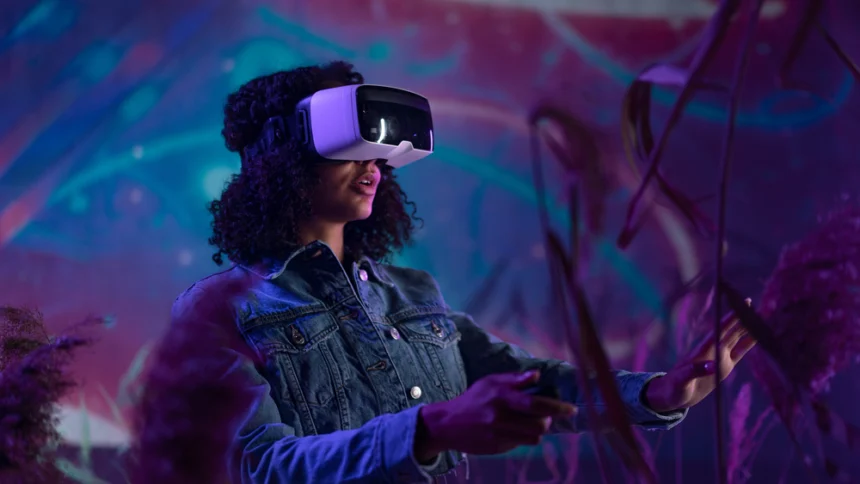
Current image: XROM Explained: The Next Evolution of VR, AR, and Spatial Computing in the Digital World Introduction

What is XROM?

XROM (Extended Reality and Omniverse) is an advanced immersive technology ecosystem that integrates:

  • Virtual Reality (VR)
  • Augmented Reality (AR)
  • Mixed Reality (MR)
  • Spatial Computing
  • Artificial Intelligence (AI)
  • Persistent virtual environments (Metaverse-like worlds)

XROM creates a unified digital-physical environment where users can interact with digital content as naturally as they interact with physical objects.

Unlike traditional VR or AR, XROM focuses on:

  • Persistent digital spaces
  • Real-time interaction
  • Intelligent environments powered by AI
  • Seamless switching between physical and virtual worlds

Core Technologies Behind XROM

1. Virtual Reality (VR)

Virtual Reality fully immerses users in computer-generated environments using headsets. In XROM, VR creates complete digital worlds where users can work, learn, and interact.

Examples include:

  • Virtual offices
  • Digital classrooms
  • Virtual training simulations

VR is the foundation of full immersion in XROM systems.


2. Augmented Reality (AR)

Augmented Reality overlays digital information on the real world using smartphones, glasses, or AR headsets.

In XROM, AR allows:

  • Digital instructions in real environments
  • Navigation overlays
  • Real-time information display

AR connects digital data with physical reality.


3. Mixed Reality (MR)

Mixed Reality combines VR and AR, allowing digital objects to interact with real-world objects.

For example:

  • A virtual robot walking on your real floor
  • Digital screens attached to your real wall

MR makes digital content feel physically present.


4. Spatial Computing

Spatial computing enables computers to understand and interact with physical space using:

  • Cameras
  • Sensors
  • AI vision systems

It allows users to interact naturally using:

  • Hand gestures
  • Eye tracking
  • Body movement

Spatial computing removes the need for traditional keyboards and mice.


5. Artificial Intelligence Integration

AI powers intelligent XROM environments by enabling:

  • Realistic virtual humans
  • Smart assistants
  • Real-time environment adaptation
  • Personalized experiences

AI makes virtual worlds feel alive and responsive.


6. Persistent Digital Worlds

XROM environments continue to exist even when users leave.

For example:

  • Virtual offices remain active
  • Digital assets stay in place
  • Users can return anytime

This creates continuity and realism.


How XROM Works

XROM systems combine hardware and software to create immersive environments.

Hardware Components

  • VR headsets
  • AR glasses
  • Spatial computing devices
  • Motion sensors
  • Eye-tracking systems

Software Components

  • 3D engines
  • AI systems
  • Cloud computing
  • Real-time rendering systems

Cloud computing ensures seamless performance and accessibility.


Key Features of XROM

1. Full Immersion

Users feel fully present in digital environments.

2. Real-Time Interaction

Users can interact with objects, people, and environments instantly.

3. Cross-Platform Accessibility

XROM works across multiple devices including:

  • Headsets
  • Smartphones
  • Computers

4. Persistent Environment

Digital spaces exist continuously.

5. AI-Powered Experiences

AI enhances realism and personalization.


Applications of XROM

1. Education

XROM can transform education by creating immersive classrooms.

Students can:

  • Explore historical events
  • Learn science in 3D environments
  • Practice skills safely

Learning becomes interactive and engaging.


2. Healthcare

Doctors can use XROM for:

  • Surgical training
  • Patient treatment planning
  • Therapy and rehabilitation

It improves accuracy and safety.


3. Gaming and Entertainment

Gaming will become more immersive and realistic.

Players can:

  • Enter game worlds physically
  • Interact naturally
  • Experience realistic environments

4. Business and Remote Work

XROM enables virtual offices where teams can collaborate naturally.

Benefits include:

  • Improved communication
  • Reduced travel costs
  • Global collaboration

5. Manufacturing and Engineering

Engineers can design and test products in virtual environments.

Benefits include:

  • Faster development
  • Reduced costs
  • Improved accuracy

6. Retail and Shopping

Customers can:

  • Try products virtually
  • Explore virtual stores
  • Make informed decisions

This improves the shopping experience.


7. Social Interaction

People can socialize in virtual environments.

Examples include:

  • Virtual meetings
  • Social spaces
  • Events and concerts

Distance becomes irrelevant.


Benefits of XROM

1. Enhanced Productivity

Immersive environments improve efficiency.

2. Improved Learning

Interactive experiences increase understanding.

3. Cost Reduction

Virtual environments reduce physical infrastructure costs.

4. Global Accessibility

Users can access environments from anywhere.

5. Realistic Simulation

Useful for training and development.


Challenges of XROM

1. Hardware Cost

Advanced devices can be expensive.

2. Technical Limitations

High processing power is required.

3. Privacy Concerns

Data collection in immersive environments raises privacy issues.

4. Adoption Barriers

Widespread adoption may take time.


Future of XROM

XROM represents the future of digital interaction. As hardware becomes more affordable and AI becomes more powerful, XROM will become more common.

Future possibilities include:

  • Fully immersive digital workplaces
  • Virtual societies
  • Advanced training systems
  • Seamless physical-digital integration

XROM may eventually become a primary way humans interact with technology.


XROM vs VR vs AR vs MR

TechnologyImmersion LevelReal-World IntegrationPersistence
VRFully immersiveNoLimited
ARPartialYesLimited
MRMixedYesModerate
XROMFully integratedYesPersistent

XROM combines the best aspects of all immersive technologies.


Conclusion

XROM is the next evolution of immersive technology, combining VR, AR, Mixed Reality, spatial computing, and AI into one powerful ecosystem. It creates persistent, intelligent digital environments where users can interact naturally and seamlessly.

From education and healthcare to business and entertainment, XROM has the potential to transform every industry. While challenges remain, rapid technological progress is making XROM more accessible and practical.

In the future, XROM could redefine how humans interact with digital technology, creating a world where the physical and digital realities exist together as one unified experience.
Android XR Rolls Out 5 New Immersive Features
Silicon Valley Sees Revival in Deep Tech and Robotics Investment
Mexico Expands Semiconductor and Nearshoring Opportunities
Vibe Coding XR: Accelerating AI + XR prototyping with XR Blocks and Gemini
Latin America’s Renewable Energy Sector Sees Strong Growth Momentum

Sign Up For Daily Newsletter

Be keep up! Get the latest breaking news delivered straight to your inbox.
By signing up, you agree to our Terms of Use and acknowledge the data practices in our Privacy Policy. You may unsubscribe at any time.
Share This Article
Facebook Copy Link Print
Share
BySanan Goyal
Editor
Follow:
An entrepreneur and strategist driven by the belief that technology and collaboration can reshape the future. With experience spanning innovation platforms, cross-border partnerships, and emerging technologies, he focuses on building ecosystems that empower creators, founders, and forward-thinkers.
Previous Article The Future of XROM: How Virtual Reality, Augmented Reality, and Spatial Computing Are Redefining Digital Experiences
Next Article The Future of XROM: How Virtual Reality, Augmented Reality, and Spatial Computing Are Redefining Digital Experiences
Leave a Comment

Leave a Reply Cancel reply

Your email address will not be published. Required fields are marked *

Stay Connected

248.1KLike
69.1KFollow
134KPin
54.3KFollow

 banner							
 banner
Create an Amazing Newspaper
Discover thousands of options, easy to customize layouts, one-click to import demo and much more.
Learn More

Latest News

C-DAC Mumbai Launches Centre for Next Gen Media Technologies: XR + AI Futures
India XR, VR, AR - XROM
AIIMS Delhi Launches VR Skill Training Hub to Revolutionize Medical Education
India XR, VR, AR - XROM
Inside The Oasis: Vivek Agrawal’s XR Revolution in Music with LoveTalk
India XR, VR, AR - XROM
Chinese Traffic Police Use AI Glasses to Spot Problematic Vehicles in 30 Seconds
China XR, VR, AR - XROM

Regions

  • Artificial Intelligence
  • XR, VR, AR – XROM
  • Blockchain
  • Quantum & Nanotechnology
  • Robotics & Automation
  • Automotive

You Might also Like

Darwin Godel Machines
Artificial Intelligence

AI That Teaches Itself to Teach Itself:Inside Hyperagents, Darwin Gödel Machines, and the Dawn of Machines That Never Stop Getting Smarter

Eddie Avil
Eddie Avil
19 Min Read
Latin America

Future Tech: How Emerging Technologies Are Transforming Our World

Sanan Goyal
4 Min Read
North America

U.S. AI Regulations Enter New Phase as Tech Giants Adapt to Compliance Rules

Sanan Goyal
9 Min Read
//

We influence 20 million users and is the number one business and technology news network on the planet

Connect

  • About Us
  • Contact
  • Adverstise
  • Events
  • Join Us
  • Member Login
  • My Bookmarks
  • Terms
  • Privacy

Future Tech

  • Artificial Intelligence
  • XR, VR, AR – XROM
  • Blockchain
  • Quantum & Nanotechnology
  • Robotics & Automation
  • Automotive

Science & Discovery

  • Life Sciences & Biotechnology
  • Earth & Environment
  • Health & Medicine
  • Space & Astronomy

Innovation & Industry

  • Startups & Entrepreneurship
  • Policy & Economy
  • Corporate Tech & Semiconductors
  • Telecom & Energy Tech

Regions

  • India
  • North America
  • Europe
  • Asia-Pacific
  • China
  • Latin America
  • Middle East & Africa

Always Stay Up to Date

Subscribe to our newsletter to get our newest articles instantly!
1CW + XROM logo white 1CW + XROM logo white

Follow US   

© 2026 1CW Media Network. All Rights Reserved.

Join Us!
Subscribe to our newsletter and never miss our latest news, podcasts etc..
Zero spam, Unsubscribe at any time.
Welcome Back!

Sign in to your account

Username or Email Address
Password

Lost your password?

Not a member? Sign Up