




Introduction
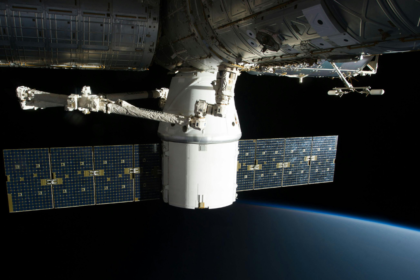
Science and discovery have always driven human progress. From understanding the laws of physics to exploring distant galaxies, scientific research continues to expand our knowledge of the universe. Today, modern technology and global collaboration are accelerating discoveries faster than ever before.
Organizations like NASA, CERN, and the World Health Organization are leading groundbreaking research in space exploration, particle physics, and global health.
Science is not just about experiments in laboratories—it shapes medicine, technology, communication, and even daily life.

The Role of Scientific Research
Scientific research helps us:
- Understand natural laws
- Develop new medicines
- Improve technology
- Solve global challenges
- Protect the environment
Through observation, experimentation, and innovation, scientists continuously push the boundaries of knowledge.
Space Exploration and Astronomical Discoveries
Space exploration has revealed incredible insights about our universe. Advanced telescopes and space missions have transformed our understanding of planets, stars, and galaxies.
For example, the James Webb Space Telescope has captured detailed images of distant galaxies, helping scientists study the early universe. These discoveries provide clues about how stars and planetary systems form.
Exploring space also helps scientists search for life beyond Earth and understand our planet’s place in the cosmos.
Breakthroughs in Particle Physics
Particle physics explores the smallest building blocks of matter. Scientists at CERN use powerful particle accelerators to study subatomic particles.
The discovery of the Higgs boson particle confirmed important theories about how particles gain mass. Such breakthroughs deepen our understanding of reality itself.
These discoveries may lead to future advancements in energy, computing, and materials science.
Medical and Health Discoveries
Science plays a critical role in healthcare and medicine. Modern biotechnology, vaccines, and advanced diagnostics have saved millions of lives.
Global health organizations like the World Health Organization coordinate research and response efforts to combat diseases worldwide.
Medical discoveries include:
- Advanced surgical techniques
- Gene therapy
- Artificial intelligence in diagnostics
- Improved vaccines
These innovations improve life expectancy and quality of life globally.
Environmental Science and Climate Research
Scientific discovery also helps us understand climate change and environmental challenges.
Researchers study:
- Rising global temperatures
- Ocean pollution
- Biodiversity loss
- Renewable energy solutions
Scientific data helps governments and organizations create sustainable solutions to protect the planet.
Technology and Innovation
Scientific discoveries drive technological progress. Innovations in artificial intelligence, robotics, quantum computing, and nanotechnology all originate from scientific research.
Modern communication systems, smartphones, and medical devices exist because of decades of scientific experimentation and discovery.
Challenges in Scientific Discovery
Despite rapid progress, science faces challenges:
- Limited funding
- Ethical concerns
- Data privacy issues
- Global inequalities in research access
However, international collaboration and technological advancements are helping overcome these barriers.
The Future of Science & Discovery
The future holds exciting possibilities:
- Human missions to Mars
- Advanced quantum computers
- Personalized medicine
- Clean energy breakthroughs
- Artificial General Intelligence
As research tools become more powerful, discoveries will accelerate even further.
Conclusion
Science and discovery are the foundation of human advancement. From exploring distant galaxies to developing life-saving medicines, scientific research continuously improves our understanding of the world.
Organizations like NASA, CERN, and the World Health Organization demonstrate how global collaboration can lead to transformative breakthroughs.
As we move into the future, science will remain the driving force behind innovation, sustainability, and progress—helping humanity solve challenges and unlock the mysteries of the universe.