



The future of computing is being rewritten at the intersection of Artificial Intelligence and Extended Reality (XR). From Big Tech’s bold bets to emerging ethical dilemmas, this conversation explores how immersive technologies may redefine work, education, commerce, and even human consciousness over the next decade.
- Meta’s XR Gamble in a Time of Layoffs
- CES 2026: Signals from the Future
- AI + XR Wearables: A New Computing Paradigm
- Disruption or Democratization?
- Enterprise Value Beyond the Hype
- Insights from Cathy Hackl’s Work
- Education, Commerce, and New Experiences
- Neurotech, Ethics, and the Limits of Immersion
- Full-Dive VR and the Simulation Question
- Looking Toward 2030
- Final Thought
Meta’s XR Gamble in a Time of Layoffs
As layoffs ripple through the tech industry, companies like Meta continue to double down on XR. This contrast highlights a long-term conviction: immersive computing may be as transformative as mobile once was—even if the short-term costs are high.
CES 2026: Signals from the Future
At CES 2026, the spotlight shifts toward AI-powered wearables, robotics, and early world models. These aren’t isolated gadgets—they point to a future where computing is ambient, embodied, and deeply contextual.
AI + XR Wearables: A New Computing Paradigm
AI-driven XR wearables promise hands-free, screenless interaction—blending perception, intelligence, and environment. This shift could move computing from something we use to something we live inside.
Disruption or Democratization?
The convergence of AI and XR raises a core question: will this technology concentrate power—or democratize it? While risks exist, falling hardware costs and open platforms suggest immersive tools may soon be accessible beyond elites and enterprises.
Enterprise Value Beyond the Hype
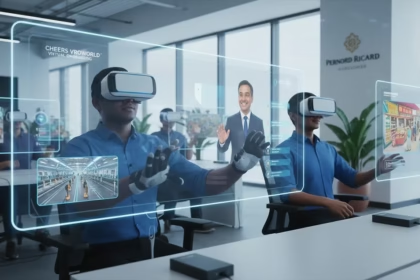
In the enterprise, XR + AI unlocks real value—from immersive training and remote collaboration to simulation-driven decision-making. Businesses adopting early aren’t chasing novelty; they’re optimizing speed, safety, and scale.
Insights from Cathy Hackl’s Work
Books by Cathy Hackl emphasize that the metaverse is not a destination, but an evolution. The key takeaway: success depends less on hardware and more on human-centered design, identity, and trust.
Education, Commerce, and New Experiences
XR and AI together could personalize education at scale, turning classrooms into interactive worlds. In commerce, brands may shift from selling products to delivering immersive experiences—where storytelling, presence, and emotion drive value.
Neurotech, Ethics, and the Limits of Immersion
As neurotechnology converges with XR, ethical questions intensify. Where do we draw boundaries around privacy, consent, and cognitive autonomy—especially as experiences become more immersive and persuasive?
Full-Dive VR and the Simulation Question
Speculation around full-dive VR and the simulation hypothesis may sound distant, but rapid progress in brain-computer interfaces suggests these ideas are no longer purely philosophical. The line between reality and simulation may blur sooner than expected.
Looking Toward 2030
By 2030, computing may be invisible, intelligent, and immersive—woven into daily life rather than accessed through screens. Navigating this future will require adaptability, ethical clarity, and bold experimentation.
Final Thought
AI and XR are not just new technologies—they are new ways of being. The real moonshot isn’t building better virtual worlds, but learning how to live wisely within them.