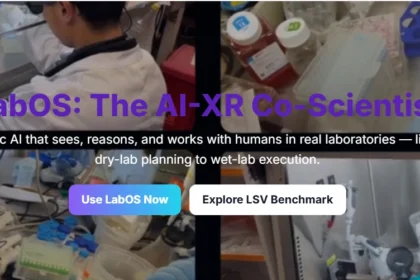





Artificial Intelligence (AI) is rapidly transforming the world around us. From voice assistants and recommendation systems to self-driving cars and medical diagnosis tools, AI has become an essential part of modern technology. At the heart of this revolution are neural networks and the ongoing pursuit of Advanced Artificial General Intelligence (AGI). The future of AI promises systems that can think, learn, and adapt like humans—or even surpass human intelligence.
- Understanding Artificial Intelligence
- What Are Neural Networks?
- The Rise of Deep Learning
- What Is Artificial General Intelligence (AGI)?
- Technologies Driving the Future of AGI
- 1. Large Language Models (LLMs)
- 2. Reinforcement Learning
- 3. Computer Vision
- 4. Multimodal AI
- 5. Neuromorphic Computing
- Real-World Applications of Advanced AI
- Benefits of Advanced AGI Systems
- Challenges and Risks of AGI
- The Future Outlook
- Conclusion
This article explores the journey from neural networks to advanced AGI systems and how they will shape the future of technology, business, and society.

Understanding Artificial Intelligence
Artificial Intelligence refers to machines or software that can perform tasks that typically require human intelligence. These tasks include learning, reasoning, problem-solving, understanding language, recognizing images, and making decisions.
AI can be divided into three main categories:
- Narrow AI (ANI) – Designed for specific tasks like chatbots, image recognition, or recommendation systems.
- General AI (AGI) – A theoretical form of AI that can perform any intellectual task a human can do.
- Superintelligence (ASI) – AI that surpasses human intelligence in all aspects.
Currently, most AI systems in use today fall under Narrow AI, but researchers are working toward AGI.
What Are Neural Networks?
Neural networks are the foundation of modern AI systems. They are inspired by the structure of the human brain and consist of layers of interconnected nodes called neurons.
These networks work by:
- Receiving input data
- Processing it through multiple layers
- Learning patterns from the data
- Producing output or predictions
Neural networks are used in many applications, such as:
- Image recognition
- Speech recognition
- Language translation
- Fraud detection
- Medical diagnosis
Deep learning, a subset of AI, uses large neural networks with many layers to achieve high accuracy and performance.
The Rise of Deep Learning
Deep learning has played a major role in advancing AI capabilities. It allows machines to learn from massive amounts of data and improve over time without explicit programming.
Key advantages of deep learning include:
- Automatic feature extraction
- Improved accuracy
- Ability to handle complex data
- Continuous learning and improvement
Deep learning powers technologies like:
- Virtual assistants
- Self-driving vehicles
- Facial recognition systems
- AI chatbots
This progress has brought us closer to creating more intelligent and flexible AI systems.
What Is Artificial General Intelligence (AGI)?
Artificial General Intelligence (AGI) refers to AI systems that can perform any intellectual task that a human can do. Unlike narrow AI, AGI can:
- Learn new tasks without retraining
- Understand context and reasoning
- Adapt to new environments
- Solve complex problems independently
AGI would not be limited to one specific function. Instead, it would be capable of general thinking, learning, and decision-making.
AGI is still under development, but it represents the next major milestone in AI evolution.
Technologies Driving the Future of AGI
Several advanced technologies are pushing AI toward AGI:
1. Large Language Models (LLMs)
LLMs can understand and generate human-like text. They can write articles, answer questions, translate languages, and assist with coding.
2. Reinforcement Learning
This technique allows AI to learn through trial and error, improving performance over time.
3. Computer Vision
Computer vision enables AI to understand images and videos, which is essential for robotics and autonomous systems.
4. Multimodal AI
Multimodal systems can process multiple types of data, such as text, images, audio, and video, making AI more powerful and versatile.
5. Neuromorphic Computing
This technology mimics the human brain’s structure and improves AI efficiency and performance.
Real-World Applications of Advanced AI
The future of AI will impact many industries, including:
Healthcare
- Early disease detection
- Personalized treatment plans
- AI-assisted surgery
Education
- Personalized learning systems
- AI tutors
- Automated grading
Business and Industry
- Automation of repetitive tasks
- Improved decision-making
- Customer support chatbots
Transportation
- Autonomous vehicles
- Smart traffic management
Cybersecurity
- Threat detection
- Fraud prevention
- Automated security systems
Benefits of Advanced AGI Systems
AGI has the potential to bring many benefits:
- Increased productivity
- Faster scientific discoveries
- Improved healthcare outcomes
- Automation of dangerous jobs
- Enhanced human creativity
AGI could help solve complex global challenges such as climate change, disease, and resource management.
Challenges and Risks of AGI
Despite its potential, AGI also presents challenges:
Ethical Concerns
AI must be used responsibly to avoid harm.
Job Displacement
Automation may replace some human jobs.
Safety and Control
Ensuring AI systems remain safe and aligned with human values is critical.
Privacy Issues
AI systems require large amounts of data, raising privacy concerns.
Researchers are working on AI safety and governance to address these issues.
The Future Outlook
The future of AI will likely include:
- More intelligent and autonomous systems
- Human-AI collaboration
- Advanced robotics
- Fully autonomous vehicles
- Personalized digital assistants
AI will become more integrated into daily life and help humans achieve more than ever before.
Conclusion
The journey from neural networks to advanced AGI systems represents one of the most important technological transformations in human history. Neural networks and deep learning have already enabled powerful AI systems, and ongoing research is bringing us closer to Artificial General Intelligence.
While challenges remain, the future of AI holds enormous promise. Advanced AGI systems could revolutionize industries, accelerate innovation, and improve the quality of life worldwide. By developing AI responsibly, humanity can unlock its full potential and create a smarter, more efficient, and more connected world.