



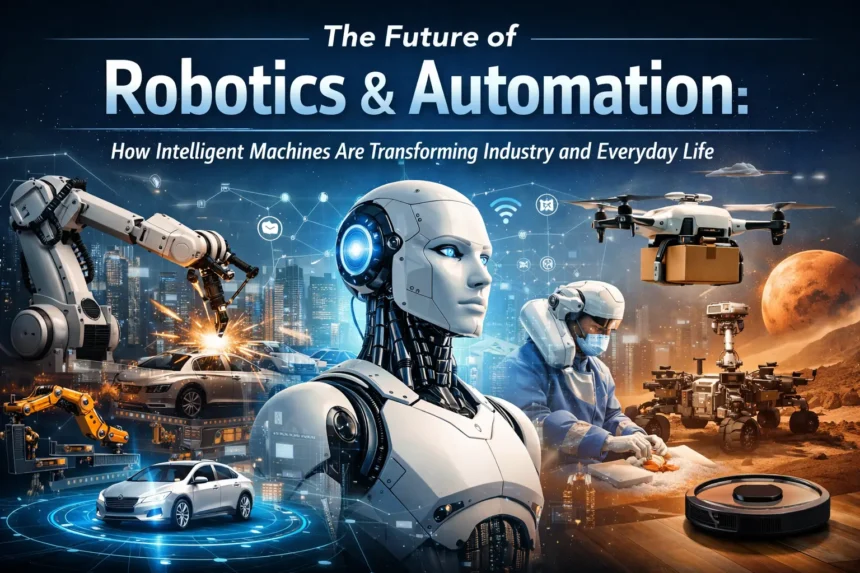
Robotics and automation are no longer concepts of science fiction. Today, intelligent machines are working in factories, hospitals, homes, and even space. As technology continues to evolve, robotics and automation are reshaping industries, improving efficiency, and changing the way humans live and work.
What Is Robotics & Automation?
Robotics refers to the design and development of machines that can perform tasks automatically. These machines, known as robots, are often powered by Artificial Intelligence (AI), sensors, and advanced software.
Automation is the use of technology to perform tasks with minimal human intervention. It can range from simple automated systems to fully autonomous robots capable of decision-making.
When combined, robotics and automation create powerful systems that improve speed, accuracy, and productivity.
Robotics in Manufacturing and Industry
One of the biggest impacts of robotics can be seen in manufacturing. Smart factories use robotic arms to assemble products, weld parts, and package goods with extreme precision.
Companies like Tesla use advanced robotics to build electric vehicles efficiently. Industrial robots work 24/7, reduce errors, and increase production speed.
Benefits in manufacturing include:
- Faster production
- Lower operational costs
- Improved safety
- Higher product quality
Automation is also a key component of Industry 4.0, where machines communicate with each other through smart systems.
Robotics in Healthcare
Robotics is transforming healthcare in remarkable ways. Surgical robots assist doctors in performing complex procedures with high precision.
For example, the da Vinci Surgical System allows surgeons to conduct minimally invasive surgeries with enhanced control and accuracy.
Robotics is also used for:
- Hospital delivery robots
- Rehabilitation assistance
- Elderly care support
- AI-powered diagnostics
Automation reduces human error and improves patient outcomes.
Autonomous Robots and AI
Modern robots are becoming smarter thanks to AI and machine learning. Autonomous robots can make decisions without direct human control.
Self-driving systems developed by companies like Boston Dynamics showcase robots that can walk, run, and adapt to environments.
Autonomous robots are now used in:
- Warehouses
- Agriculture
- Defense
- Space exploration
For example, NASA uses robotic rovers on Mars to explore terrain that humans cannot access.
Robotics in Everyday Life
Robotics is not limited to industries. It is entering homes and daily routines.
Examples include:
- Robotic vacuum cleaners
- Smart home automation systems
- AI-powered personal assistants
- Delivery drones
Companies like Amazon use warehouse robots to speed up delivery processes worldwide.
Automation makes life more convenient and efficient for consumers.
Challenges of Robotics & Automation
Despite its advantages, robotics also brings challenges:
- Job displacement concerns
- High development costs
- Cybersecurity risks
- Ethical issues
Governments and companies must work together to create policies that balance innovation and workforce development.
The Future of Robotics & Automation
The future of robotics is connected to Artificial Intelligence, Blockchain, and IoT (Internet of Things). Smart machines will become more adaptive, collaborative, and intelligent.
We can expect:
- Human-robot collaboration (cobots)
- Fully automated smart cities
- AI-driven supply chains
- Advanced space robotics
As technology advances, robotics and automation will not replace humans entirely but will assist them in performing tasks more efficiently and safely.
Conclusion
Robotics & automation are transforming the world faster than ever before. From smart factories and advanced healthcare systems to autonomous robots and smart homes, intelligent machines are shaping the future.
The key to success lies in responsible innovation, education, and adaptation. The world is entering a new era where humans and robots work together to build a smarter, safer, and more efficient future.