



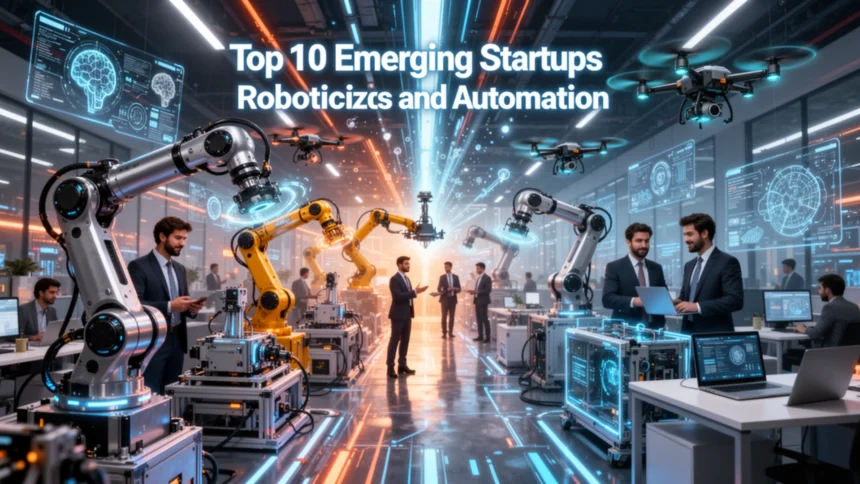
In today’s rapidly evolving technological landscape, robotics and automation are no longer futuristic concepts—they are shaping industries, redefining business operations, and transforming daily life. From smart factories and autonomous vehicles to AI-driven robotic assistants, the innovations emerging in this sector are staggering. While global giants like Boston Dynamics and FANUC have set high benchmarks, several emerging startups are now making significant strides, introducing cutting-edge solutions that are both inventive and impactful. Here, we explore the top 10 startups revolutionizing robotics and automation in 2026.
1. Vexa Robotics
Vexa Robotics has quickly gained attention for its advanced warehouse automation systems. Unlike traditional robotic arms that perform single, repetitive tasks, Vexa’s solutions utilize AI-powered multi-tasking robots capable of handling inventory management, order fulfillment, and quality control simultaneously. The startup emphasizes modularity, allowing companies to scale their robotic systems without overhauling existing infrastructure. Vexa’s technology not only accelerates operations but also significantly reduces human errors and operational costs.
2. AutoMate AI
Specializing in industrial automation, AutoMate AI integrates AI-driven decision-making with robotic process automation (RPA). Their robots are capable of learning from the factory environment, identifying inefficiencies, and autonomously optimizing production lines. This adaptive capability positions AutoMate AI as a game-changer for industries struggling with fluctuating demand and complex manufacturing processes. Their recent deployment in electronics manufacturing has shown productivity improvements of over 35%, demonstrating the tangible impact of intelligent automation.
3. RoboFleet Technologies
RoboFleet Technologies focuses on autonomous mobile robots (AMRs) for logistics and delivery. Unlike conventional warehouse robots, RoboFleet’s solutions are designed for dynamic environments. Their robots can navigate crowded spaces, adapt to unexpected obstacles, and coordinate with multiple units in real time. With e-commerce and last-mile delivery services growing exponentially, RoboFleet is at the forefront of creating a future where deliveries are faster, safer, and more efficient.
4. NeoBotics
NeoBotics is innovating in the service robotics sector, particularly in healthcare and hospitality. Their humanoid robots are equipped with advanced natural language processing and emotion recognition systems, enabling them to interact seamlessly with humans. Hospitals are using NeoBotics robots to assist in patient care, deliver medications, and provide companionship to long-term patients. In hotels and restaurants, their robots streamline check-in processes, room service, and concierge services, enhancing customer experiences while optimizing labor efficiency.
5. Forge Robotics
Forge Robotics is a rising star in construction automation. By integrating autonomous machinery with AI-based project management tools, Forge Robotics enables construction sites to operate with unprecedented precision and speed. Their autonomous bricklaying and welding robots reduce construction timelines and improve safety by handling hazardous tasks. Forge Robotics is particularly noted for its environmentally conscious designs, ensuring energy efficiency and minimal material waste during construction operations.
6. Synapse Robotics
Synapse Robotics is redefining industrial inspection with AI-powered robotic systems capable of detecting faults in machinery and infrastructure. Their robots employ advanced computer vision and machine learning algorithms to analyze equipment performance in real time, predicting failures before they occur. This predictive maintenance approach minimizes downtime and extends the lifespan of critical assets, making Synapse Robotics a crucial partner for manufacturing plants, oil refineries, and energy utilities.
7. AeroBotix
AeroBotix is making waves in the drone automation industry. Unlike traditional drones used for photography or hobby purposes, AeroBotix focuses on industrial applications such as agriculture, surveying, and infrastructure inspection. Their drones are fully autonomous, capable of performing complex tasks such as crop monitoring, pipeline inspection, and environmental surveying with high precision. By combining robotics with AI, AeroBotix reduces the need for human intervention in potentially dangerous or repetitive tasks.
8. FlexiBot Systems
FlexiBot Systems is leading innovation in collaborative robots, commonly known as cobots. These robots are designed to work safely alongside humans, enhancing productivity without replacing the workforce. FlexiBot’s cobots are easily programmable, adaptable to various industries, and capable of handling repetitive, strenuous, or dangerous tasks. By fostering human-robot collaboration, FlexiBot is driving efficiency while ensuring workplace safety, making automation more accessible to small and medium-sized enterprises.
9. Quantum Robotics
Quantum Robotics is pioneering robotics applications in research and education. Their platforms integrate robotics with AI-driven simulations, enabling institutions to explore advanced automation concepts without heavy investment in hardware. Additionally, Quantum Robotics develops precision robots for laboratories, automating repetitive experimental procedures, data collection, and analysis. Their approach accelerates research, reduces human error, and makes sophisticated robotics accessible for academic and scientific communities.
10. EcoBot Innovations
EcoBot Innovations focuses on sustainability-driven robotics solutions. From automated recycling robots to agricultural drones that optimize water usage, EcoBot is leveraging robotics to address environmental challenges. Their modular robotic systems are designed to operate efficiently, with minimal energy consumption and waste. By integrating AI and IoT, EcoBot ensures that these systems are intelligent, scalable, and capable of making real-time decisions that promote eco-friendly practices across industries.
Why Emerging Robotics Startups Matter
The impact of these startups extends beyond simple automation. They represent a paradigm shift in how industries approach efficiency, safety, and scalability. Emerging robotics startups bring fresh perspectives, tackling problems that legacy systems often overlook. By integrating AI, machine learning, and autonomous systems, they are creating solutions that are adaptive, cost-effective, and human-centric.
Startups like these also fuel economic growth by creating specialized jobs in robotics engineering, AI development, and system integration. They encourage cross-disciplinary collaboration, blending robotics, software engineering, and industry-specific expertise. Moreover, they often prioritize sustainable and ethical automation, ensuring that technological progress does not come at the expense of environmental or social responsibility.
Challenges and the Road Ahead
While the potential of robotics startups is immense, challenges remain. High development costs, regulatory hurdles, and integration with existing workflows are significant barriers. Additionally, workforce adaptation and public acceptance of autonomous systems are ongoing considerations. However, continuous innovation, coupled with supportive policies and strategic partnerships, is likely to overcome these obstacles.
The road ahead is promising. With continuous investment and technological advancements, these startups are expected to redefine manufacturing, healthcare, logistics, research, and beyond. As robotics and automation continue to evolve, the startups highlighted here will likely play a pivotal role in shaping the next generation of intelligent, autonomous systems.
Conclusion
The robotics and automation landscape is experiencing unprecedented growth, driven largely by innovative startups. From AI-powered industrial robots to autonomous drones and humanoid assistants, these companies are transforming industries, enhancing productivity, and improving safety. Startups like Vexa Robotics, AutoMate AI, and EcoBot Innovations exemplify how agility, creativity, and technology can converge to create solutions that were once considered science fiction.
Investing in and supporting these emerging startups is not just about adopting new technologies—it is about embracing a future where robotics and automation drive efficiency, sustainability, and human advancement. As we look ahead, it’s clear that the next wave of industrial and service innovation will be led not by established giants, but by these nimble, visionary startups shaping the future of robotics.