



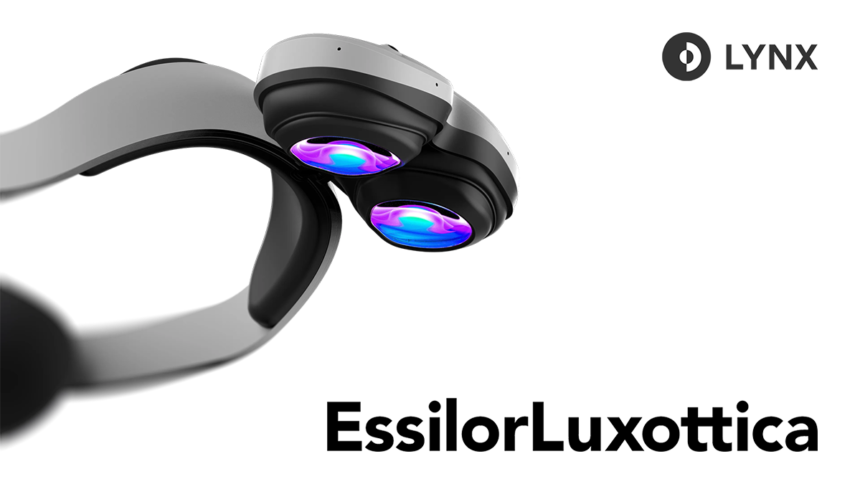
The Lynx R2 mixed reality headset is not coming out—and that is now definitively confirmed. But the way its technology has been absorbed, and the signals coming from investors and the XR community, say more about the future of AR infrastructure than about one cancelled device.
Lynx’s founder Stan Larroque has told backers that EssilorLuxottica has acquired “all the IP, assets and most of the team,” in a formal deal that transfers the brand, domain, code, manufacturing know‑how and databases into the world’s largest eyewear group. SL Process, Lynx’s parent, entered judicial liquidation in March, and with only around $6 million raised between seed, Kickstarter and Series A, the company simply ran out of runway in a brutal European hardware funding environment. Larroque himself exits to take a leadership role at drone maker Parrot, while most of the team moves inside EssilorLuxottica.
What happens to the R2 now is almost beside the point. Road to VR notes there is “no word” on the headset’s fate, and given EssilorLuxottica’s deep partnership with Meta on Ray‑Ban and Oakley smart glasses, a fresh Quest‑class competitor was never likely to survive under its new owner. Instead, the real prize is the stack: spatial tracking algorithms, video see‑through imaging, SLAM, depth sensing and the know‑how to build high‑FOV, developer‑oriented hardware like the R2.
In my original piece I argued that this transforms EssilorLuxottica into AR’s quiet gatekeeper: a company that already owns consumer eyewear channels and a profitable smartglasses line, now pulling the core spatial software in‑house. The Ray‑Ban Meta numbers underline this; smartglasses have been described as driving more than a third of EssilorLuxottica’s activity growth, at a scale that is already profitable and ramping production toward tens of millions of units per year. Plug Lynx’s spatial capabilities into that engine, and you get something potent: everyday frames that carry increasingly headset‑grade awareness of the physical world.
The privacy and sovereignty angle, barely explored in the initial headlines, becomes important here. By owning the algorithms that map rooms, anchor digital content and process continuous video of the environment, EssilorLuxottica can design AR flows where world‑anchored data doesn’t have to live entirely inside the stacks of Meta, Apple or Google. For large enterprises and certain government or tactical eyewear customers, the ability to keep spatial data under different governance is not a footnote—it is a feature.
There is, however, a missing chapter. Lead investor Artur Sychov has publicly said “there is much more to say about this story and many things are missing from the context,” promising a Somnium Space statement once things are officially concluded. We already know Lynx was building hardware on a shoestring; what we do not yet know is how founder–investor alignment, product timing and market strategy interacted with that constraint. Those details will matter, because they speak to whether European XR can sustain independent, open‑ish hardware platforms at all—or whether the only viable path is to become IP pipelines feeding much larger industrial players.
Zooming out, Lynx’s disappearance as an independent headset vendor is a genuine loss for diversity in the MR ecosystem. Yet for EssilorLuxottica, this may be one of the most consequential “quiet moves” in its history: a traditional face‑wear manufacturer upgrading from being the front‑end of other people’s platforms to owning more of the invisible spatial stack itself. The R2 never shipped, but the ideas and code behind it will live on—not in a device with Lynx’s logo, but in a future where the most powerful AR players might not look like tech companies at all.