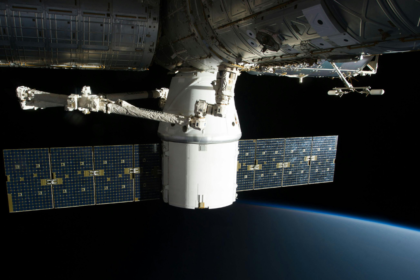





Space exploration is entering a revolutionary era. What was once limited to government-led missions is now expanding rapidly with private companies, advanced telescopes, and international cooperation. Humanity is not only exploring planets and moons but also searching for one of the most profound answers: Are we alone in the universe?
- The New Era of Moon Exploration
- Mars: The Next Frontier for Human Exploration
- Advanced Space Telescopes Unlocking Cosmic Secrets
- The Search for Life Beyond Earth
- The Rise of Private Space Companies
- International Cooperation in Space
- Future Technologies That Will Transform Space Exploration
- Human Colonization of Space
- Challenges of Space Exploration
- Conclusion: Humanity’s Journey Into the Cosmos
Organizations like NASA, ISRO, and private companies such as SpaceX are pushing the boundaries of space technology, making the future of space exploration more exciting than ever before.

The New Era of Moon Exploration
Moon exploration has become a major focus again after decades of limited activity. Scientists see the Moon as a gateway for deeper space missions.
Key goals of future Moon missions:
- Establish permanent human bases
- Mine resources like water ice
- Test technologies for Mars missions
- Study lunar geology and history
NASA’s Artemis program aims to return humans to the Moon and eventually create a sustainable lunar presence. Water discovered at the Moon’s poles could be converted into drinking water, oxygen, and rocket fuel, making long-term space missions more practical.
India also made history when ISRO successfully landed the Chandrayaan-3 mission on the Moon’s south pole region, proving that more nations can now achieve advanced space milestones.
Mars: The Next Frontier for Human Exploration
Mars is the most likely candidate for future human settlement. Scientists believe Mars once had rivers, lakes, and possibly microbial life.
Why Mars is important:
- Similar day length to Earth (24.6 hours)
- Presence of water ice
- Potential for human colonization
- Evidence of ancient habitable environments
NASA’s rovers, such as Perseverance, are collecting rock samples that may contain signs of ancient microbial life. These samples could be returned to Earth for detailed study in the future.
Meanwhile, SpaceX is developing the Starship rocket, designed specifically to carry humans to Mars. The long-term vision is to create a self-sustaining human colony on the planet.
Advanced Space Telescopes Unlocking Cosmic Secrets
One of the most important tools in modern space exploration is the James Webb Space Telescope. This powerful telescope is helping scientists see deeper into space than ever before.
Major discoveries include:
- Detection of distant galaxies formed shortly after the Big Bang
- Analysis of atmospheres on distant exoplanets
- Identification of water vapor, carbon dioxide, and methane in alien worlds
These discoveries bring scientists closer to identifying planets that could support life.
The Search for Life Beyond Earth
Scientists are now focusing on locations in our solar system that may contain liquid water, the key ingredient for life.
Promising places for life:
1. Europa
Europa, a moon of Jupiter, has a massive ocean beneath its icy surface. Scientists believe this ocean may contain more water than all of Earth’s oceans combined.
2. Enceladus
Enceladus ejects water vapor and organic molecules into space, indicating a subsurface ocean that could support life.
3. Mars
Evidence suggests Mars once had liquid water and possibly microbial life.
Future missions aim to drill beneath surfaces and analyze samples directly for biological signs.
The Rise of Private Space Companies
Private companies are transforming space exploration by making launches cheaper, faster, and more frequent.
Major contributions:
- Reusable rockets reducing launch costs
- Plans for commercial space stations
- Development of human Mars missions
- Space tourism for civilians
SpaceX has already demonstrated reusable rockets and plans to send humans to Mars. Other companies are working on orbital hotels and private lunar missions.
This shift from government-only programs to public-private partnerships is accelerating innovation.
International Cooperation in Space
Space exploration is becoming a global effort.
Major space agencies involved include:
- NASA (United States)
- ISRO (India)
- European Space Agency (Europe)
- Roscosmos (Russia)
These organizations collaborate on research, missions, and technology development.
India, in particular, has become a major player due to its cost-effective and highly successful missions.
Future Technologies That Will Transform Space Exploration
1. Reusable Rockets
Reusable rockets significantly reduce costs and make space travel more sustainable.
2. Artificial Intelligence
AI helps spacecraft navigate, analyze data, and operate autonomously.
3. Space Habitats
Scientists are designing space stations and habitats for long-term human living.
4. Nuclear Propulsion
Future spacecraft may use nuclear engines, allowing faster travel to Mars and beyond.
Human Colonization of Space
Human colonization of other planets may become reality within this century.
Possible future developments include:
- Permanent Moon bases
- Human missions to Mars
- Space stations orbiting Earth and the Moon
- Asteroid mining
These advancements will help humanity become a multi-planetary species.
Challenges of Space Exploration
Despite the progress, many challenges remain:
- Extreme radiation exposure
- Long travel times
- High costs
- Human health risks in microgravity
Scientists are actively developing solutions to overcome these obstacles.
Conclusion: Humanity’s Journey Into the Cosmos
The future of space exploration is filled with incredible possibilities. With powerful telescopes, advanced spacecraft, and global collaboration, humanity is closer than ever to discovering life beyond Earth.
Organizations like NASA, ISRO, and companies like SpaceX are leading the way toward a future where humans live and work beyond Earth.
Space exploration is no longer just about discovery—it is about the future of humanity itself.