



Virtual reality is finding a new application in Chinese higher education—not for training soldiers or engineers, but for teaching civic responsibility and national security awareness to university students.
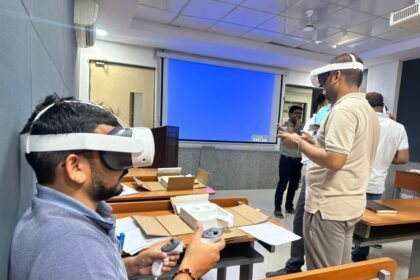
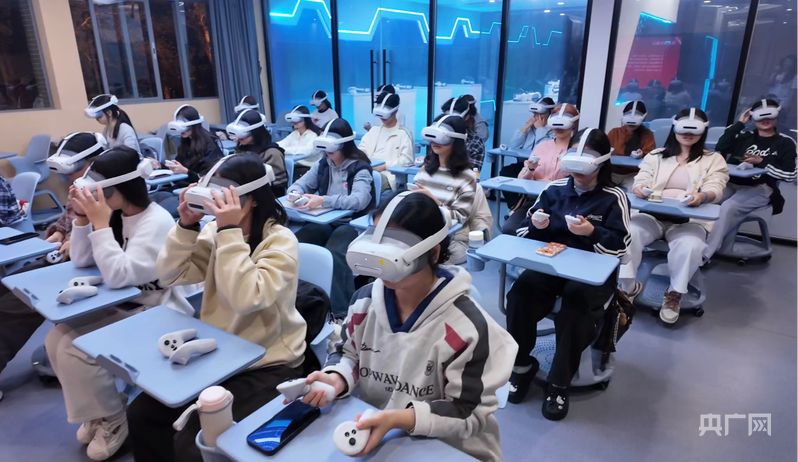
Guangdong University of Foreign Studies has launched an immersive VR program that places students directly into simulated United Nations peacekeeping scenarios. Wearing headsets, students navigate mission handling, security risk prevention, and emergency response drills designed to illustrate China’s role in international peacekeeping operations.
The initiative, rolled out during China’s National Security Education Day, represents a significant evolution in how governments might leverage extended reality technologies for political education beyond their traditional use in military or vocational training.
From Textbooks to Virtual Battlefields
The program is operated by the university’s English College Digital Ideological and Political Work Studio, which has developed what it calls an “ideological education + multilingual + digital intelligence” integrated model. The goal is transforming students from what administrators describe as “passive recipients” into “active constructors, content creators, and course presenters.”
According to reports from Chinese XR media, students respond positively to the experiential approach. The immersive format makes abstract concepts about national security tangible and personal in ways that traditional classroom lectures cannot match.
The VR scenarios specifically emphasize China’s contributions to UN peacekeeping missions, allowing students to “directly experience China’s role as a major power in maintaining world peace and security,” according to program materials. This framing connects technical education with nationalist messaging in a format Gen Z students find engaging.
A New Frontier for Civic Education
What makes this development noteworthy isn’t the technology itself—VR has been used in educational settings for years. Rather, it’s the deliberate application of immersive tech to ideological education that signals a potential shift in how governments approach civic socialization.
Traditional methods of teaching national security concepts rely on lectures, videos, and written materials. These formats create distance between the student and the subject matter. VR collapses that distance, creating what educators call “presence”—the psychological sensation of being somewhere else. When that “somewhere else” is a peacekeeping operation framed through a particular geopolitical lens, the educational experience becomes inherently more persuasive.
The program targets both on-campus students and external audiences, suggesting ambitions beyond a single institution. The university’s focus on foreign language talent—training students who will interact with international communities—adds another layer of significance. These students aren’t just learning about national security; they’re being prepared to represent China’s perspective on global security issues to foreign audiences.
Technology as Ideological Tool
The Guangdong program fits within a broader pattern of governments exploring XR technologies for purposes beyond entertainment or job training. While Western institutions have experimented with VR for empathy training and historical education, the explicit connection to “ideological and political work” marks a more direct approach to using immersive technology for political socialization.
The studio’s stated aims—”digital intelligence in ideological education, high-quality content supply, and student-centered participation”—reveal sophisticated thinking about engagement. By positioning students as co-creators rather than mere consumers, the program attempts to generate buy-in through active participation.
As XR hardware becomes cheaper and more accessible, we’re likely to see more governments experiment with immersive technologies for civic education. The Guangdong model provides an early template for how virtual reality might be deployed not just to train minds, but to shape them.
Whether this approach proves more effective than traditional methods remains to be seen. What’s clear is that the line between educational technology and ideological technology is becoming increasingly difficult to distinguish—and that ambiguity may be precisely the point.