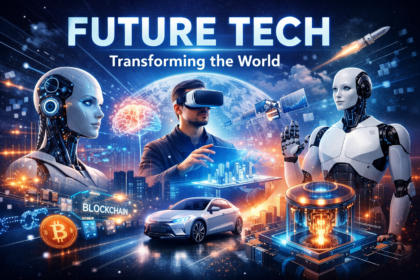




Technology is evolving faster than ever before. What once seemed like science fiction is quickly becoming reality. Over the next decade, powerful innovations will reshape how we live, work, travel, and interact with the world. From artificial intelligence to space exploration, future technologies will not only improve convenience but also solve global challenges such as climate change, healthcare access, and resource management.
- 1. Artificial Intelligence Will Become Everywhere
- 2. Robotics Will Change Work and Daily Life
- 3. Self-Driving Cars Will Revolutionize Transportation
- 4. Renewable Energy Will Power the Future
- 5. Biotechnology Will Improve Human Health
- 6. Virtual Reality and Augmented Reality Will Change Digital Experiences
- 7. Space Technology Will Expand Human Exploration
- 8. Quantum Computing Will Solve Complex Problems
- 9. Smart Cities Will Improve Urban Living
- 10. Internet and Connectivity Will Become Faster and Stronger
- Challenges of Future Technology
- Conclusion
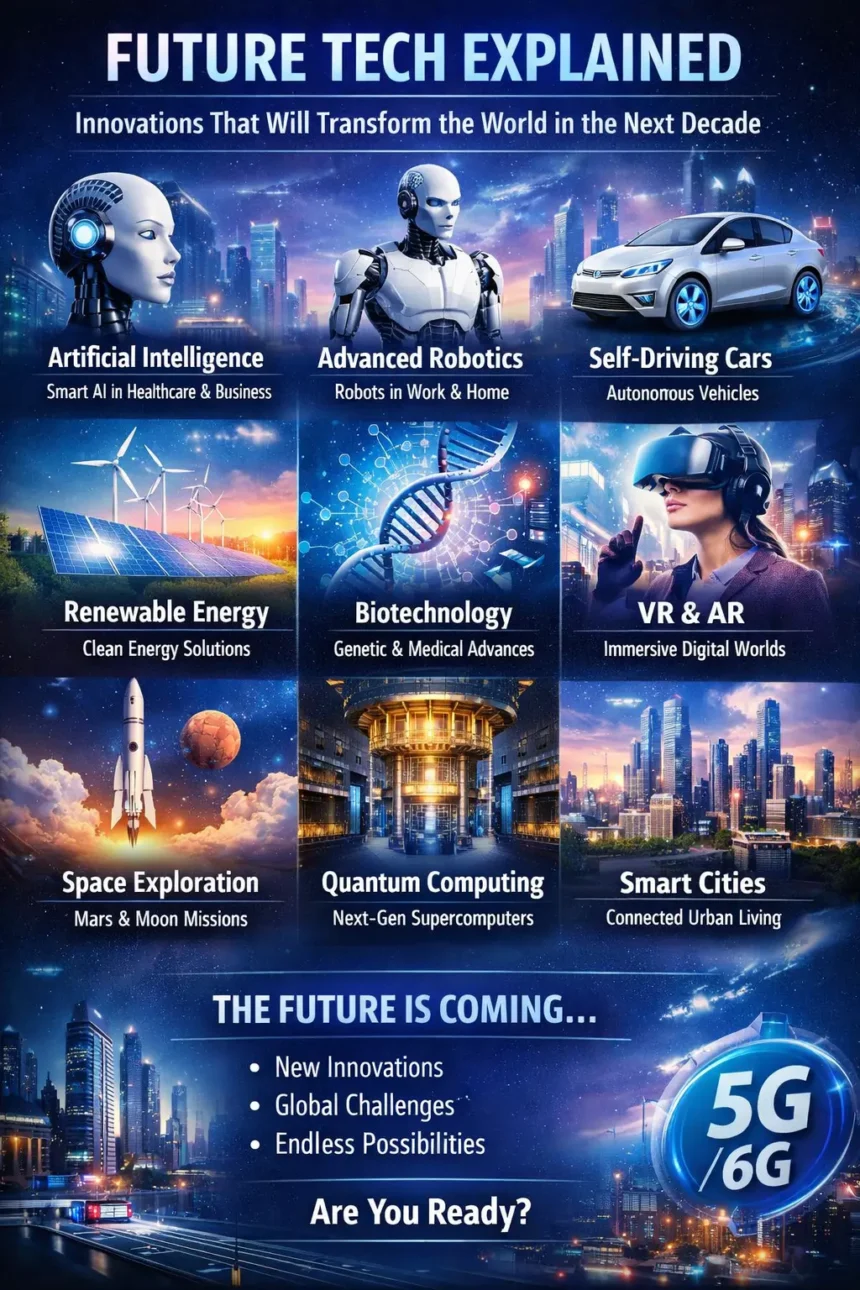
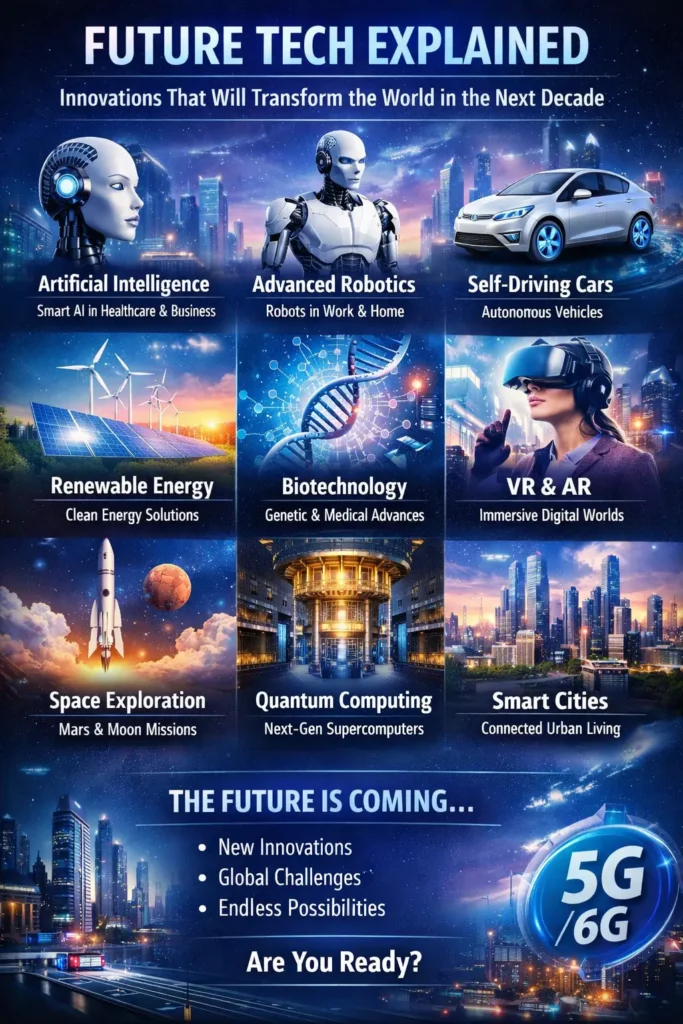
This article explains the most important future technologies and how they will transform the world.
1. Artificial Intelligence Will Become Everywhere
Artificial Intelligence (AI) is already part of our daily lives, but its future impact will be much bigger. AI systems developed by organizations like OpenAI and Google are becoming smarter and more useful.
How AI will transform the world:
- Healthcare: AI will detect diseases like cancer earlier and more accurately than doctors.
- Education: Personalized learning systems will adapt to each student’s needs.
- Business: AI will automate repetitive tasks, improving efficiency.
- Customer support: AI assistants will provide instant, human-like help.
In the next decade, AI will become a normal part of every industry.
2. Robotics Will Change Work and Daily Life
Robots are becoming smarter, safer, and more capable. Companies like Tesla and Boston Dynamics are building advanced robots that can walk, lift objects, and assist humans.
Future uses of robots:
- Factory automation
- Hospital assistance
- Home cleaning and caregiving
- Dangerous jobs like mining and disaster rescue
Robots will help humans, not replace them entirely. They will handle risky and repetitive tasks.
3. Self-Driving Cars Will Revolutionize Transportation
Autonomous vehicles are one of the most exciting future technologies. Self-driving cars use AI, sensors, and cameras to drive safely without human control.
Benefits include:
- Fewer accidents caused by human error
- Reduced traffic congestion
- Lower transportation costs
- Increased mobility for elderly and disabled people
Companies like Tesla and Waymo are leading this innovation.
In the future, driverless taxis and delivery vehicles will become common.
4. Renewable Energy Will Power the Future
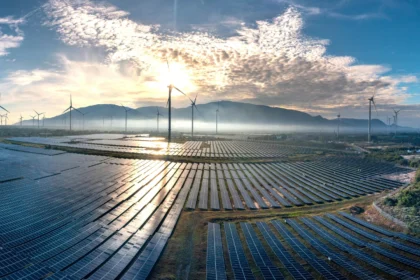
Climate change is a major global challenge, and technology is helping solve it. Renewable energy sources like solar, wind, and advanced batteries will replace fossil fuels.
Future energy innovations:
- More efficient solar panels
- Better battery storage
- Smart energy grids
- Electric vehicles replacing petrol cars
Clean energy will reduce pollution and create a sustainable future.
5. Biotechnology Will Improve Human Health
Biotechnology will allow scientists to cure diseases and improve human health. Gene editing tools like CRISPR can fix genetic problems.
Future biotech possibilities:
- Cure genetic diseases
- Personalized medicine
- Artificial organs
- Longer and healthier lifespans
Hospitals will use advanced technology to treat patients more effectively.
6. Virtual Reality and Augmented Reality Will Change Digital Experiences
Virtual Reality (VR) and Augmented Reality (AR) will transform entertainment, education, and work.
Future applications:
- Virtual classrooms
- Remote work in virtual offices
- Realistic gaming experiences
- Virtual travel experiences
Companies like Microsoft are developing advanced VR and AR systems.
These technologies will make digital experiences feel real.
7. Space Technology Will Expand Human Exploration
Space exploration is entering a new era. Organizations like NASA and SpaceX are developing advanced rockets and spacecraft.
Future space developments:
- Human missions to Mars
- Space tourism
- Moon bases
- Satellite networks for global internet
Space technology will also improve communication and scientific research.
8. Quantum Computing Will Solve Complex Problems
Quantum computers are much more powerful than traditional computers. They can solve problems that normal computers cannot.
Future impact:
- Faster drug discovery
- Better weather prediction
- Improved cybersecurity
- Advanced scientific research
Quantum computing will transform industries like medicine, finance, and science.
9. Smart Cities Will Improve Urban Living
Future cities will use technology to improve safety, efficiency, and quality of life.
Smart city features:
- Smart traffic systems
- Energy-efficient buildings
- Advanced public transportation
- AI-powered security systems
Technology will make cities cleaner, safer, and more efficient.
10. Internet and Connectivity Will Become Faster and Stronger
5G and future 6G networks will provide faster internet speeds and better connectivity.
Benefits include:
- Faster downloads
- Better video quality
- Improved online gaming
- Support for smart devices and IoT
Everything will be connected, creating a smarter world.
Challenges of Future Technology
While future technology offers many benefits, it also creates challenges:
- Job changes due to automation
- Privacy concerns
- Cybersecurity risks
- Ethical questions about AI
Governments and organizations must use technology responsibly.
Conclusion
The next decade will bring incredible technological transformation. Artificial intelligence, robotics, renewable energy, biotechnology, and space exploration will reshape the world. These innovations will improve healthcare, transportation, education, and daily life.
Technology will not only make life easier but also help solve major global problems. The future is full of possibilities, and those who understand and adapt to these changes will benefit the most.