



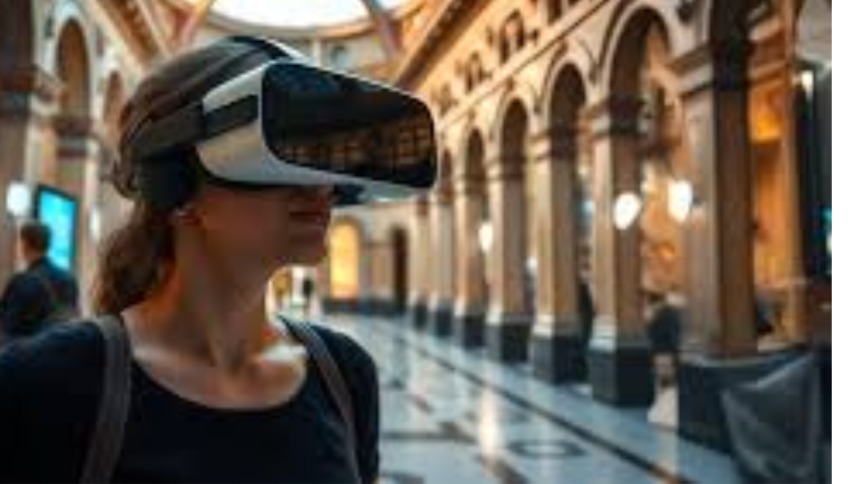
The digital world is undergoing a massive transformation, and at the center of this revolution is XROM — Extended Reality, a term that combines Virtual Reality (VR), Augmented Reality (AR), Mixed Reality (MR), and Spatial Computing into a unified immersive ecosystem. These technologies are reshaping how people work, learn, play, and interact with digital content. Unlike traditional computing, which is limited to flat screens, XROM allows users to interact with digital elements directly within their physical environment, making experiences more natural, immersive, and interactive.
- Understanding XROM: The Core Technologies
- 1. Virtual Reality (VR): Fully Immersive Digital Worlds
- 2. Augmented Reality (AR): Enhancing the Real World
- 3. Spatial Computing: The Next Evolution of Interaction
- How XROM Is Transforming Digital Experiences
- 1. Revolutionizing Work and Productivity
- 2. Transforming Education and Training
- 3. Changing Gaming and Entertainment
- 4. Revolutionizing Healthcare
- 5. Transforming Retail and Shopping
- 6. Redefining Social Interaction and Communication
- The Role of Artificial Intelligence in XROM
- Challenges Facing XROM Technology
- The Future of XROM
- Conclusion
As hardware becomes more powerful and artificial intelligence integrates with immersive platforms, XROM is rapidly evolving into the next major computing paradigm — often described as the future successor to smartphones and traditional computers.
Understanding XROM: The Core Technologies
XROM is built on three foundational technologies, each offering unique capabilities that redefine digital interaction.
1. Virtual Reality (VR): Fully Immersive Digital Worlds
Virtual Reality places users inside a completely digital environment using headsets. Users can explore virtual worlds, interact with objects, and experience realistic simulations.
VR is widely used in:
- Gaming and entertainment
- Flight and military simulations
- Medical training
- Virtual tourism
- Education and skill development
VR allows users to experience environments that may be impossible or dangerous in the real world. It enhances learning and training by providing safe, immersive environments where users can practice real-world skills.
2. Augmented Reality (AR): Enhancing the Real World
Augmented Reality overlays digital information onto the real world using smartphones, smart glasses, or AR headsets. Instead of replacing reality, AR enhances it.
Popular uses of AR include:
- Mobile games like Pokémon GO
- Navigation systems with real-time directions
- Virtual furniture placement in homes
- Retail virtual try-on experiences
AR blends digital content with physical surroundings, making information more accessible and interactive. This improves user engagement and productivity in daily life.
3. Spatial Computing: The Next Evolution of Interaction
Spatial computing represents the most advanced form of XROM. It allows users to interact with digital objects as if they exist physically in real space. Instead of using a mouse or touchscreen, users can control digital content using hand gestures, eye tracking, and voice commands.
Spatial computing:
- Blends digital and physical environments seamlessly
- Allows apps and objects to exist in 3D space
- Creates infinite virtual workspaces
- Enables realistic interaction with digital objects
This technology uses sensors, cameras, and AI to understand the physical environment and respond intelligently to user actions.
How XROM Is Transforming Digital Experiences
XROM is already revolutionizing multiple industries and changing how humans interact with technology.
1. Revolutionizing Work and Productivity
XROM enables virtual workspaces where users can collaborate regardless of physical location. Employees can use virtual offices, attend immersive meetings, and interact with digital tools in 3D space.
Benefits include:
- Remote collaboration in virtual environments
- Interactive presentations and data visualization
- Virtual monitors and infinite workspace
- Improved team productivity
Spatial computing allows users to place multiple virtual screens around them, creating a powerful and flexible work environment.
2. Transforming Education and Training
Immersive learning environments allow students to experience concepts rather than just reading about them.
Examples include:
- Virtual science laboratories
- Medical simulations for surgeons
- Engineering and technical training
- Historical recreations
XR-based training improves learning efficiency and reduces risks associated with real-world training environments.
3. Changing Gaming and Entertainment
Gaming is one of the biggest beneficiaries of XROM technology. Players can step inside virtual worlds and interact naturally with environments and characters.
Future entertainment includes:
- Fully immersive video games
- Interactive virtual concerts
- Virtual cinemas
- Social virtual worlds
Advanced 3D scanning and rendering technologies are making virtual environments more realistic than ever before.
4. Revolutionizing Healthcare
Healthcare is adopting XROM for:
- Surgical planning and visualization
- Mental health therapy
- Rehabilitation programs
- Medical training
Doctors can visualize organs in 3D, improving accuracy and patient outcomes.
5. Transforming Retail and Shopping
Retailers are using XROM to improve customer experience through:
- Virtual try-on systems
- Interactive product previews
- Virtual stores
- Enhanced online shopping
Customers can view products in their real environment before buying, reducing uncertainty and returns.
6. Redefining Social Interaction and Communication
XROM enables immersive social experiences where people can interact using realistic avatars and shared virtual environments.
Future possibilities include:
- Virtual meetings
- Digital social worlds
- Virtual travel with friends
- Realistic long-distance communication
These immersive experiences create stronger emotional connections compared to traditional communication methods.
The Role of Artificial Intelligence in XROM
Artificial Intelligence is a key driver behind XROM advancements. AI enables:
- Real-time environment recognition
- Gesture and voice control
- Intelligent virtual assistants
- Personalized immersive experiences
AI helps spatial computing systems understand user behavior and surroundings, making interactions more intuitive and natural.
Challenges Facing XROM Technology
Despite its potential, XROM still faces several challenges:
1. High Hardware Costs
Advanced XR headsets remain expensive for average consumers.
2. Limited Content
The ecosystem of apps and experiences is still growing.
3. Technical Limitations
Battery life, comfort, and processing power need improvement.
4. Privacy and Security Concerns
These devices collect environmental and personal data, raising privacy issues.
However, rapid innovation and investment are helping overcome these challenges.
The Future of XROM
The future of XROM is incredibly promising. In the next decade, we can expect:
- Lightweight AR glasses replacing smartphones
- Fully immersive virtual workplaces
- AI-powered immersive assistants
- Spatial computing becoming mainstream
- Integration with metaverse platforms
Tech companies are investing heavily in XROM because it represents the next evolution of computing — where digital experiences exist naturally within physical reality.
Conclusion
XROM is not just an emerging technology — it is the foundation of the future digital world. By combining Virtual Reality, Augmented Reality, and Spatial Computing, XROM is transforming how humans interact with digital content. It enables immersive experiences, improves productivity, enhances learning, and creates entirely new ways of communication.
As technology advances and becomes more accessible, XROM will redefine digital experiences and become an essential part of everyday life. The transition from screen-based computing to immersive spatial computing marks the beginning of a new era — where the digital and physical worlds merge seamlessly.