


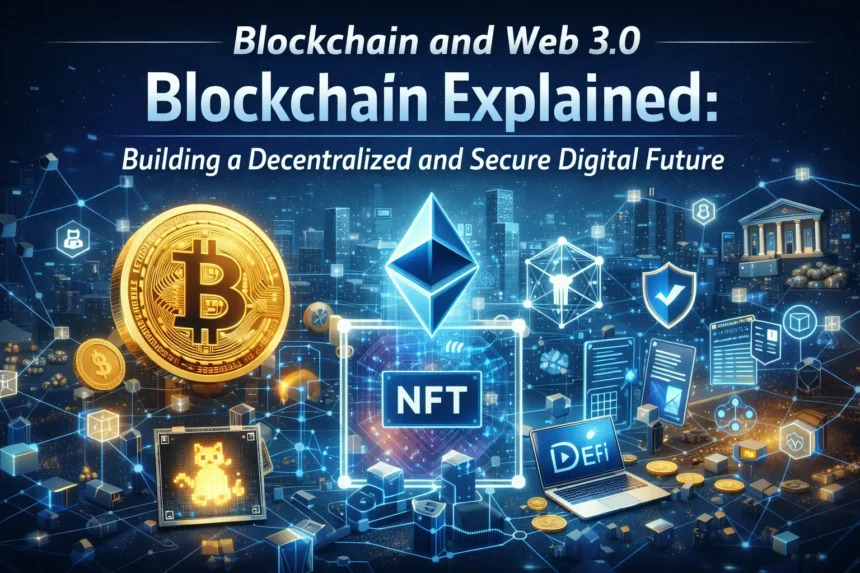
Blockchain and Web 3.0 are transforming the internet from a centralized system controlled by large companies into a decentralized, secure, and user-owned digital ecosystem. These technologies are redefining how people interact online, manage data, and conduct financial transactions.
In 2026, Blockchain and Web 3.0 are not just emerging trends—they are the foundation of the future internet.
What Is Blockchain?
Blockchain is a decentralized digital ledger that records transactions across multiple computers. Instead of storing data in one central server, blockchain distributes it across a network, making it more secure and transparent.
Each record in blockchain is called a “block,” and these blocks are connected in a chain. Once data is added, it cannot be easily changed or deleted.
Key features of blockchain include:
- Decentralization – No single authority controls the data
- Security – Advanced encryption protects information
- Transparency – Transactions are visible and verifiable
- Immutability – Data cannot be altered once recorded
Blockchain eliminates the need for intermediaries, making processes faster and more secure.
What Is Web 3.0?
Web 3.0 is the next generation of the internet built on blockchain technology. It allows users to own their data, identity, and digital assets without relying on centralized platforms.
Evolution of the internet:
- Web 1.0 – Read-only websites (1990s)
- Web 2.0 – Social media and interactive platforms
- Web 3.0 – Decentralized, user-controlled internet
Web 3.0 gives users more privacy, security, and control.
Cryptocurrencies and Digital Finance
One of the most popular uses of blockchain is cryptocurrency. Cryptocurrencies are digital currencies that operate without banks.
Examples include:
- Bitcoin
- Ethereum
These digital currencies allow secure, fast, and borderless payments.
Blockchain also enables decentralized finance (DeFi), which provides financial services like lending, borrowing, and trading without traditional banks.
Benefits include:
- Lower transaction fees
- Faster global payments
- Financial access for everyone
- No intermediaries
Smart Contracts and Automation
Smart contracts are self-executing programs stored on the blockchain. They automatically execute actions when specific conditions are met.
For example:
- Automatic payment after service completion
- Secure digital agreements
- Supply chain tracking
Smart contracts reduce fraud and eliminate the need for intermediaries.
Web 3.0 and Digital Ownership
Web 3.0 allows users to truly own digital assets such as NFTs, digital identities, and online content.
Benefits include:
- Full ownership of digital assets
- Better privacy protection
- Control over personal data
- No reliance on centralized companies
Creators can earn directly without intermediaries.
Blockchain in Real-World Applications
Blockchain is used in many industries, including:
Finance
Secure payments, digital banking, and decentralized finance.
Healthcare
Secure storage of medical records and patient data.
Supply Chain
Tracking products from manufacturing to delivery.
Cybersecurity
Protecting sensitive data and preventing hacking.
Companies like IBM use blockchain for secure business solutions.
Advantages of Blockchain and Web 3.0
Major benefits include:
- Improved security
- Increased transparency
- Reduced costs
- Faster transactions
- Better data privacy
These advantages make blockchain ideal for the future internet.
Challenges and Limitations
Despite its benefits, blockchain also faces challenges:
- Scalability issues
- High energy consumption
- Technical complexity
- Regulatory uncertainty
However, ongoing innovation is solving these problems.
The Future of Blockchain and Web 3.0
The future of blockchain and Web 3.0 is promising. In the coming years, we can expect:
- Decentralized social media platforms
- Secure digital identity systems
- Blockchain-based voting systems
- Fully decentralized financial systems
- User-owned internet platforms
Web 3.0 will give power back to users.
Conclusion
Blockchain and Web 3.0 are revolutionizing the internet by creating a decentralized, secure, and user-controlled digital world. These technologies eliminate intermediaries, improve security, and give users full control over their data and digital assets.
As blockchain and Web 3.0 continue to grow, they will shape the future of finance, technology, and the internet itself.