



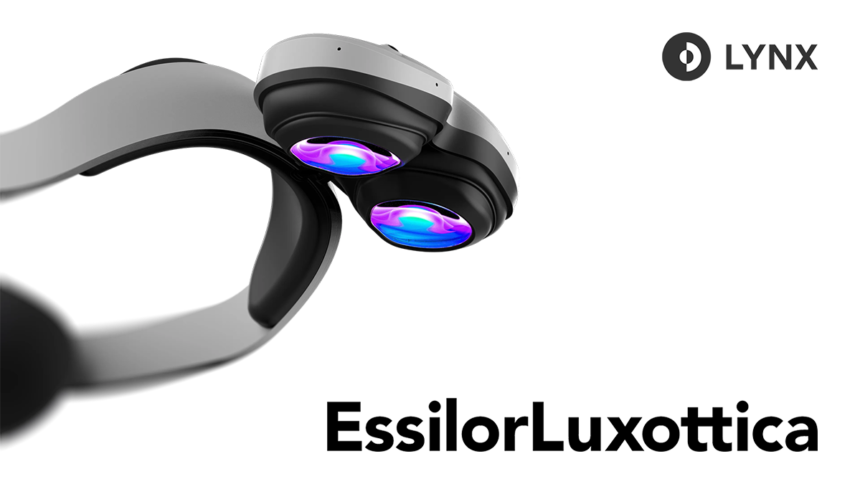
The Lynx R2 mixed reality headset is never coming out. That much is now confirmed. But the story of what happened to it — and where its technology is headed — reveals something far more significant than a single product cancellation.
EssilorLuxottica, the French-Italian conglomerate that owns Ray-Ban, Oakley, and a commanding share of the global eyewear market, has acquired the assets of Lynx, a Paris-based XR startup that had been developing standalone mixed reality headsets since the early 2020s. The acquisition followed Lynx’s liquidation, effectively ending the company as an independent entity and pulling the anticipated R2 headset off the table permanently.
What Lynx Was Building — and Why It Mattered
Lynx wasn’t a household name outside XR enthusiast circles, but within them, it had earned genuine respect. The company’s original headset, the Lynx R1, was a standalone mixed reality device that stood out for its ambitious optical design and its willingness to compete in a space dominated by much larger players. The R2 was positioned as a meaningful upgrade — better mixed reality passthrough, refined spatial tracking, and improved ergonomics — and had been anticipated by a community of developers and early adopters who saw Lynx as one of the few independent voices in the MR headset market.
That voice is now silent. And its most valuable assets — the spatial tracking algorithms, the Video See-Through imaging software, and the underlying SLAM (Simultaneous Localization and Mapping) technology — now belong to one of the most powerful companies in global eyewear.
This Isn’t About a Headset. It’s About the Stack.
EssilorLuxottica has made no indication it plans to resurrect the R2 or enter the standalone headset market. That’s almost certainly by design. What the company appears to want is the intellectual property underneath the hardware — the software systems that allow a device to understand and map physical space in real time, anchor digital content to the real world, and do so with the kind of optical precision that an eyewear company would find strategically valuable.
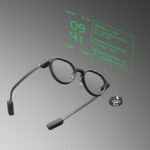
Former Lynx engineers are reported to have joined EssilorLuxottica’s internal research divisions, suggesting this is a talent acquisition as much as a technology one. The goal, according to discussions emerging from the augmented reality community, is to integrate these spatial computing capabilities into next-generation smart glasses — not bulky headsets, but lightweight, wearable frames that look more like eyewear than computing hardware.
The privacy dimension is also worth noting. By developing proprietary AR algorithms in-house, EssilorLuxottica positions itself to build world-anchored augmented reality experiences without routing sensitive spatial data through the ecosystems of Meta, Apple, or Google. For enterprise clients — and potentially for European defense and government contracts through tactical eyewear brands — that kind of data sovereignty is not a minor detail. It’s a selling point.
The Ray-Ban Meta Picture Gets More Complex
EssilorLuxottica’s existing partnership with Meta on the Ray-Ban smart glasses line has already demonstrated that the company understands where consumer AR is heading. Those glasses — currently more AI assistant than full AR overlay — have outsold expectations and helped normalize the idea of computing built into everyday eyewear.
But the Lynx acquisition hints at something more autonomous. A company that owns both the frame manufacturing heritage and the underlying spatial software stack doesn’t need to depend on a platform partner indefinitely. Whether EssilorLuxottica eventually deploys Lynx’s technology within the Ray-Ban Meta ecosystem, spins it into a competing smart glasses line, or licenses it to enterprise and defense clients remains to be seen. What’s clear is that it now has options it didn’t have before.
The Consolidation Era Is Here
The XR industry has been in a prolonged shakeout. Startups that raised capital during the pandemic-era enthusiasm for the metaverse have found themselves caught between slowing consumer demand and the overwhelming resources of big tech incumbents. Lynx is not the first casualty, and it won’t be the last.
What makes the EssilorLuxottica acquisition notable is who’s doing the buying. This isn’t a software company absorbing hardware IP. It’s a traditional manufacturing giant — one that has spent decades perfecting how things sit on human faces — recognizing that the next frontier of its industry runs on spatial computing software. The R2 headset may be shelved, but the technology that powered it has found a home with a company that has both the distribution scale and the optical manufacturing expertise to do something serious with it.
For the XR community, the loss of Lynx as an independent developer is a genuine blow to ecosystem diversity. For EssilorLuxottica, it may turn out to be one of the quieter — and more consequential — moves in the company’s history.