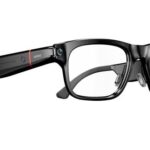




Smart glasses have always been a technology in search of a purpose. Google Glass arrived too early and too awkwardly. Meta’s Ray-Bans are stylish but lean heavily on social features. Now Newline is entering the arena with a different value proposition entirely — one aimed squarely at the business professional who needs more than a camera on their face, but an intelligent assistant they can wear.
The company’s new NewGlasses line is built around a core idea: that the most useful place to put AI isn’t in your pocket, but in your field of vision. And on paper, the spec sheet backs that ambition up.
Visual Intelligence at the Front of the Frame
The headline feature is 4K capture combined with AI-powered object recognition, enabling real-time text and image extraction directly from what the wearer is looking at. In practical terms, this means a field technician can glance at a machine part and pull up its documentation, or a warehouse worker can scan inventory without breaking stride. The glasses don’t just record — they interpret.
This is a meaningful distinction. Most wearable cameras on the market are passive recording devices. NewGlasses positions itself as an active perception layer, turning the wearer’s environment into a data source that AI can immediately act on. For industries like manufacturing, logistics, healthcare, and field services, that’s not a gimmick — it’s a genuine workflow accelerator.
The Audio Problem, Finally Addressed
One of the underappreciated challenges of enterprise wearables is audio. Factory floors are loud. Conference calls in open offices are a nightmare. Newline has taken this seriously with directional sound field technology and active noise reduction, engineered specifically to isolate voice in noisy environments.
Clear audio matters as much as clear visuals when your device is supposed to serve as a hands-free communication tool. A smart glass that mishears commands or struggles to transmit clean voice data is worse than useless in a high-stakes environment. Newline’s focus on audio engineering suggests the company has done its homework on where previous enterprise wearables have failed.
AI Models and Multilingual Translation Built In
NewGlasses integrates with mainstream large language models for real-time voice interaction, effectively putting a conversational AI assistant inside the frame. But arguably the most compelling enterprise application is the built-in multilingual translation capability — a feature that could be transformative for global companies operating across language barriers.
Imagine a procurement officer negotiating with a supplier in a different language, or a multinational company conducting real-time briefings across regional offices. The glasses handle translation in the moment, removing friction that normally requires a separate interpreter or device. In a world where supply chains are global and remote collaboration is standard, this isn’t a novelty feature — it’s a business case.
Wearability Is the Real War
All the AI in the world means nothing if employees won’t wear the device. At just 46 grams, NewGlasses are remarkably light for a device carrying this much technology. Photochromic lenses that adapt to lighting conditions, combined with an ergonomic frame built for extended wear, signal that Newline understands the all-day comfort problem that has plagued enterprise wearables since the beginning.
Weight and comfort are often treated as secondary concerns in hardware specs, but in wearable technology, they determine adoption rates. A device that causes discomfort by noon will be in a desk drawer by afternoon.
The Bigger Picture
NewGlasses arrives at a moment when enterprise AI adoption is accelerating, and companies are actively looking for hardware that bridges digital intelligence with physical workflow. The device doesn’t ask workers to stop what they’re doing to check a screen — it brings the information to where their eyes already are.
Whether Newline can execute on this vision at scale, and at a price point that makes enterprise procurement realistic, remains to be seen. But the specification set is coherent, the use cases are credible, and the timing is right. The smart glasses market may finally have found its real customer: not the tech enthusiast, but the professional who just needs to get the job done.