




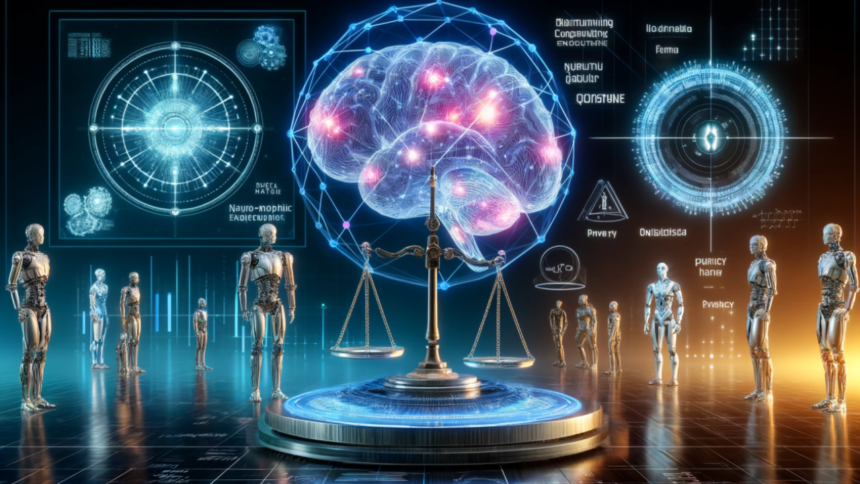
Artificial Intelligence (AI) is no longer just a futuristic concept—it is already transforming the way we work, communicate, and build technology. From chatbots that answer complex questions to systems that generate images, videos, and code, AI has entered every major industry. The rise of Large Language Models (LLMs) and the ongoing development of Artificial General Intelligence (AGI) represent the next phase of this technological revolution.
- What Are Large Language Models (LLMs)?
- What Is Artificial General Intelligence (AGI)?
- How AI and LLMs Are Changing Technology
- 1. Automation of Work
- 2. Improved Software Development
- 3. Better Customer Experience
- 4. Content Creation Revolution
- 5. Healthcare Innovation
- The Role of AI in Business Growth
- Benefits of Advanced AI
- Challenges and Concerns
- The Future of AGI and AI Technology
- Conclusion
In this blog, we will explore what AGI and LLMs are, how they work, and how they are changing the future of technology.
What Are Large Language Models (LLMs)?
Large Language Models are advanced AI systems trained on massive amounts of text data. They learn patterns, grammar, logic, and meaning from billions of words. These models can:
- Answer questions
- Write articles and blogs
- Translate languages
- Generate code
- Assist in customer support
Examples include ChatGPT, Gemini, and Claude.
LLMs use deep learning techniques and neural networks to understand and generate human-like text. They do not think like humans, but they can predict and generate accurate responses based on training data.
What Is Artificial General Intelligence (AGI)?
Artificial General Intelligence refers to AI that can perform any intellectual task that a human can do. Unlike current AI systems that are specialized, AGI would be able to:
- Learn new skills without retraining
- Reason and solve complex problems
- Understand emotions and context
- Adapt to new environments
AGI does not fully exist yet, but researchers and technology companies are actively working toward it.
How AI and LLMs Are Changing Technology
1. Automation of Work
AI can automate repetitive tasks such as data entry, customer support, and content creation. This helps businesses save time and increase efficiency.
2. Improved Software Development
Developers now use AI tools to write code faster, debug programs, and build applications more efficiently.
3. Better Customer Experience
AI chatbots provide instant support 24/7. They can answer customer questions quickly and improve satisfaction.
4. Content Creation Revolution
AI can create blogs, images, videos, and marketing content. This helps creators produce more content in less time.
5. Healthcare Innovation
AI helps doctors analyze medical data, detect diseases earlier, and improve treatment planning.
The Role of AI in Business Growth
Businesses are using AI to:
- Improve marketing strategies
- Analyze customer behavior
- Automate workflows
- Increase productivity
- Reduce costs
Companies that adopt AI early gain a competitive advantage.
Benefits of Advanced AI
- Faster decision making
- Increased productivity
- Reduced human error
- Better data analysis
- Improved efficiency
AI helps humans work smarter, not harder.
Challenges and Concerns
Despite its benefits, AI also has challenges:
- Job displacement concerns
- Privacy and data security risks
- Ethical issues
- Dependence on technology
Proper regulation and responsible development are important.
The Future of AGI and AI Technology
The future of AI is incredibly promising. AGI could transform industries such as:
- Education
- Healthcare
- Engineering
- Finance
- Entertainment
AI will become a powerful partner that helps humans solve global problems.
Conclusion
The rise of advanced AI, especially Large Language Models and the future of AGI, is changing technology at an unprecedented pace. From automating tasks to improving healthcare and business operations, AI is shaping the future.
While challenges exist, the benefits are far greater. AI is not here to replace humans—it is here to empower them.
The future belongs to those who understand and use AI effectively.