



The Indian Air Force (IAF) is preparing to induct a revolutionary training platform: the AGNI multi-domain combat simulator. Unlike conventional single-platform simulators, AGNI is designed to replicate the complexity of modern warfare by combining virtual reality systems, electronic warfare environments, and high-definition satellite imagery into one integrated framework.
🔹 What Makes AGNI Unique
- Multi-domain integration: AGNI stands for Air combat, Ground planning, and Network Integrated. It will allow personnel from the Army, Navy, and Air Force to train together on a shared network.
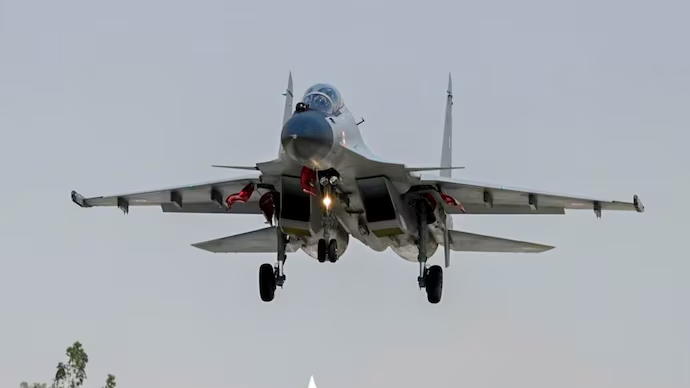
- Frontline aircraft simulation: Four advanced cockpits modeled on Rafale, Sukhoi-30MKI, and Mirage 2000 jets will form the aerial warfare segment.
- Adversary replication: The simulator can mimic rival aircraft such as the F-16, F-22, and China’s J-10/J-11, providing realistic combat scenarios.
- Motion-based realism: Pilots will experience take-offs, high-G maneuvers, and weapon deployment with motion feedback technology.
- Immersive environments: Integrated VR and mixed-reality systems will simulate diverse operational conditions—night missions, fog, rain, low visibility, and dense cloud cover.
🔹 Strategic Impact
- Inter-service synergy: By connecting fighter jets, drones, and missiles in real-time, AGNI strengthens collaboration between India’s military branches.
- Enhanced readiness: Pilots and commanders can train to track hundreds of targets simultaneously, preparing for complex combat theaters.
- Future-proof training: With adversary replication and electronic warfare environments, AGNI ensures India’s forces remain prepared for evolving threats.
🔹 Why It Matters
The procurement of AGNI signals India’s commitment to next-generation defense technologies. As warfare increasingly spans air, land, sea, cyber, and space, simulators like AGNI provide a safe yet realistic environment to rehearse strategies without risking lives or equipment.
This move also underscores India’s push toward self-reliance in defense innovation, blending indigenous design with global best practices in simulation and XR technologies