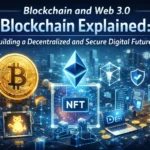


The internet is evolving. After Web 1.0 and Web 2.0, the world is now entering the era of Web 3.0—a decentralized internet powered by blockchain technology. Web 3.0 is transforming how people interact online, manage digital assets, and control their personal data. It promises a future where users—not corporations—own and control the internet.
Blockchain is the foundation of Web 3.0, enabling secure, transparent, and decentralized systems that are reshaping finance, digital ownership, and online services.

Understanding Web 3.0: The Next Generation Internet
Web 3.0 represents the third generation of internet technology focused on decentralization, privacy, and user ownership.
Evolution of the web:
- Web 1.0 (1990s–2000s): Static websites, read-only content
- Web 2.0 (2000s–2020s): Social media, user-generated content, centralized platforms
- Web 3.0 (2020s–Future): Decentralized internet, blockchain-based systems, user ownership
In Web 2.0, companies control user data. In Web 3.0, users control their own digital identity and assets.
What Is Blockchain and Why It Matters
Blockchain is a decentralized digital ledger that records transactions securely across a network of computers. It ensures transparency, security, and immutability.
Popular blockchain platforms include:
- Ethereum
- Bitcoin
These platforms enable secure financial transactions, smart contracts, and decentralized applications.
Key benefits of blockchain:
- No central authority
- Secure and transparent transactions
- Reduced risk of fraud
- Greater trust and reliability
Blockchain is the core technology behind Web 3.0.
How Web 3.0 Is Transforming Finance
One of the biggest impacts of Web 3.0 is in finance through decentralized finance (DeFi). DeFi removes banks and intermediaries, allowing users to transact directly.
Benefits of decentralized finance:
- Faster global transactions
- Lower fees
- Financial access for everyone
- Full user control of funds
Cryptocurrencies like Bitcoin allow users to send and receive money anywhere in the world without banks.
This creates a more open and accessible financial system.
Digital Ownership and NFTs
Web 3.0 introduces true digital ownership through blockchain technology. Users can own digital assets such as NFTs (Non-Fungible Tokens), digital art, virtual land, and online identities.
Benefits of digital ownership:
- Full control over digital assets
- Proof of ownership
- Ability to buy, sell, and trade assets securely
- Direct earnings for creators
This empowers artists, creators, and users.
Decentralized Applications (DApps)
Decentralized applications, or DApps, run on blockchain networks instead of centralized servers. These apps offer better privacy, security, and transparency.
Examples of DApps include:
- Decentralized finance platforms
- Blockchain-based games
- Decentralized social media
- Digital marketplaces
Unlike traditional apps, DApps cannot be easily controlled or censored by a single company.
Web 3.0 and Data Privacy
In Web 2.0, companies collect and control user data. In Web 3.0, users own and control their personal data.
Benefits include:
- Improved privacy
- Reduced data theft
- User-controlled identity
- Secure authentication
This creates a safer internet environment.
Real-World Applications of Web 3.0
Web 3.0 is already being used in many industries:
Finance
Cryptocurrency payments, DeFi platforms, and digital wallets.
Gaming
Blockchain-based games with real digital ownership.
Supply Chain
Tracking products securely and transparently.
Healthcare
Secure storage of medical records.
Companies like IBM are using blockchain for secure business operations.
Challenges of Web 3.0
Despite its advantages, Web 3.0 faces several challenges:
- Technical complexity
- Scalability issues
- Regulatory uncertainty
- Limited adoption
However, ongoing innovation is improving Web 3.0 technology.
The Future of Web 3.0
The future of Web 3.0 is promising and transformative. In the coming years, we may see:
- Fully decentralized social media platforms
- Blockchain-based digital identity systems
- Decentralized financial systems
- User-owned online platforms
- Secure and private internet services
Web 3.0 will give users more freedom, privacy, and control.
Conclusion
Web 3.0 and blockchain are transforming the internet, finance, and digital ownership. By removing intermediaries and giving users control, Web 3.0 creates a more secure, transparent, and decentralized digital world.
As technology continues to evolve, Web 3.0 will redefine how people interact online and shape the future of the internet.