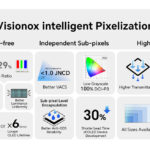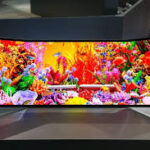





Recently, at SID Display Week 2026, Visionox unveiled the world’s first 3000 PPI
glass-based ultra-high-resolution OLED AR display solution. This breakthrough
achieves a pixel density of up to 3000 PPI on a glass substrate for the first time,
breaking the long-standing resolution ceiling faced by glass-based approaches in the
high-end AR market. At the same time, it reduces the left and right bezels of the
display to less than 1 millimeter, opening up a new display path for next-generation
VR/AR devices.
The global smart glasses market is currently entering a breakout phase. According to
IDC, worldwide smart glasses shipments reached 14.505 million units in 2025, up
41.6% year on year, and are expected to exceed 23 million units in 2026.
However, behind the market boom, silicon-based OLED, which high-end AR devices
heavily rely on, remains costly, while glass-based AMOLED, despite offering higher
mass-production efficiency, has long been constrained by a pixel density bottleneck.
Visionox’s new solution directly addresses this contradiction. While delivering ultra-
fine image quality and eliminating visible pixel grain, it also leverages the inherent
advantages of large-panel output and compatibility with existing production lines,
potentially driving down the cost of high-performance AR display modules and
supporting lower end-product prices.
In addition, Visionox also showcased multiple technology solutions, including AR-
QLED 3000 PPI and full-color VR glass-based OLED 1500 PPI. With glass-based
AMOLED as its pivot, Visionox is redefining a new technological path for AR
displays. (Source: VRAR WORLD)