

**Revolutionizing the Future of Work: NVIDIA XR AI Brings Agents to AR Glasses**
Imagine an AI-powered assistant that’s always by your side, helping you navigate the physical world with ease. No more fumbling for tools or searching for information – this new generation of AI agents is here to make your work life easier.
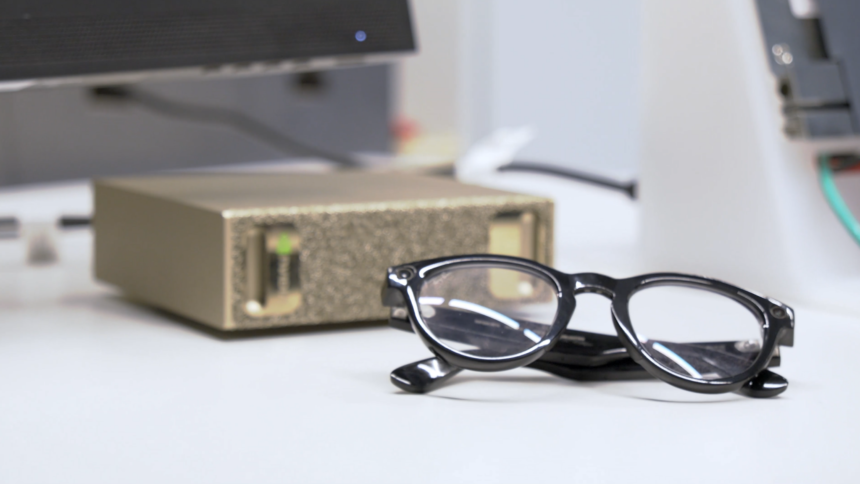
NVIDIA XR AI has officially launched in public beta, giving developers a powerful framework to build multimodal AI agents for AR glasses and XR devices. This game-changing technology is poised to transform the way we interact with our surroundings, access knowledge, and take action in real-time.
But what makes these agents so special? Unlike chatbots or copilots, they’re not just limited to generating responses. They need to understand their environment, perceive video and audio data, interpret fast-changing conditions, and reason about the next best action – all with lightning-fast speed and accuracy.
To achieve this, NVIDIA XR AI brings together four core capabilities:
1. **Multimodal Perception**: Ingests real-world signals from AR and XR devices, including video, audio, depth, pose, and sensor data.
2. **Enterprise Integration**: Connects agents to specialized tools and services, such as NVIDIA Metropolis and VSS for visual AI and video understanding.
3. **AI Model Support**: Supports a broad ecosystem of AI models, including NVIDIA Nemotron reasoning models and other compatible foundation models.
4. **Agent Orchestration**: Simplifies the integration of multimodal perception, enterprise retrieval, reasoning models, and agent orchestration.
With NVIDIA XR AI, developers can build agentic applications that are spatially aware, context-aware, and deliver low-latency assistance in AR and XR experiences. This means no more distractions or delays – just seamless, intuitive interactions with your environment.
The future of work is here, and it’s powered by AI. Stay ahead of the curve and explore the possibilities of NVIDIA XR AI today!
Partner Example
At Stanford University’s School of Medicine, researchers in Dr. Le Cong’s and Dr. Mengdi Wang’s lab are pioneering XR-AI integration for laboratory science through multiple breakthrough systems in collaboration with NVIDIA and VITURE. LabOS enables AI to see what scientists see through smart glasses and supports real-time experimentation, while CRISPR-GPT provides AI-guided gene editing, enabling researchers to achieve successful knockouts and epigenetic modifications on first attempts using LabOS-powered smart glasses with NVIDIA’s XR AI libraries. Building on these successes, the Stanford and Princeton groups behind LabOS are launching LabSuperVision (LSV) in close collaboration with NVIDIA—a benchmark for AI+XR in lab-driven science —and are calling on academic research groups to contribute to this exciting ecosystem.
Learn More about Dr.Le Cong’s work from our recent 1CW podcast episode-https://youtu.be/nO2PnBCvVtk?si=cvoi0fjRvVgZoI4n