



Every hour a combat aircraft sits grounded for training purposes is an hour it isn’t available for its actual mission. It’s a tension military operators have lived with for decades, and one that Parallax Labs believes immersive technology can finally resolve.
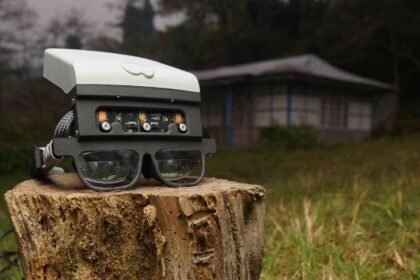
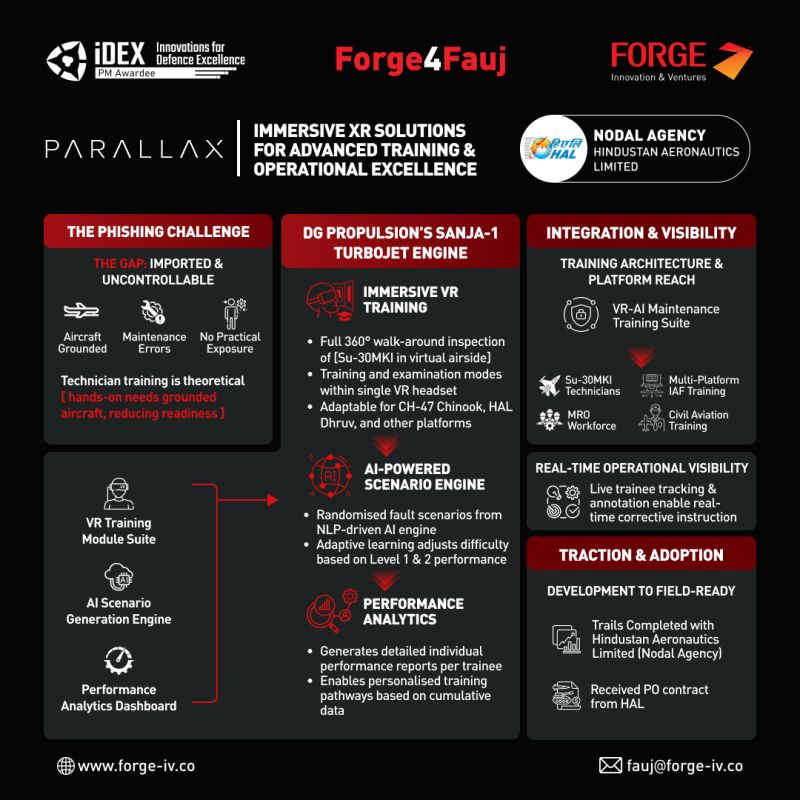
The Indian defence-tech firm has developed a VR-enabled AI training platform specifically designed for military aircraft maintenance personnel — starting with the Su-30MKI, the backbone of the Indian Air Force’s strike capability. The system places technicians inside a fully immersive virtual environment that replicates the aircraft with enough fidelity to train real procedural muscle memory, without touching the real machine.
More Than a Virtual Manual
What separates this from a glorified 3D walkthrough is the intelligence layer underneath. The platform continuously monitors user behaviour — tracking task efficiency, attention patterns, and procedural accuracy — to generate adaptive performance analytics. In other words, the system doesn’t just record whether a trainee completed a task. It understands how they completed it and adjusts difficulty and guidance accordingly.
Four distinct operational modes give the platform genuine training depth:
- Training Mode — guided procedural walkthroughs for new personnel
- Examination Mode — assessed scenarios to certify competency
- AI-Driven Mode — dynamically generated challenges based on individual performance profiles
- Intelligent Troubleshooting — high-risk fault simulation that would be impractical or dangerous on a live aircraft
That last mode is arguably the most valuable. Simulating hydraulic failures, electrical faults, or engine anomalies on an operational aircraft isn’t realistic — but a technician who has never encountered those scenarios under pressure is a liability in the field.
Built to Scale Across Platforms
Parallax Labs has designed the system with modularity as a core principle. The platform is already being adapted for the CH-47 Chinook heavy-lift helicopter and HAL Dhruv, India’s domestically developed utility helicopter — with civilian aviation applications on the roadmap. That flexibility matters. Defence procurement is notoriously slow, but a platform that transfers across airframes dramatically improves its commercial case.
The broader context is hard to ignore. As defence budgets face scrutiny and operational tempo increases, fleet availability is becoming as strategically important as fleet size. Training systems that reduce downtime, cut costs, and improve technician readiness aren’t peripheral investments — they’re force multipliers. Parallax Labs is making a credible argument that XR technology belongs at the centre of that equation.